Tool Steel Solutions
for Aluminum Extrusion Dies
Engineered Hot Work Tool Steel for Aluminum Extrusion
NSPM focuses on hot work tool steel for extrusion dies, where performance is governed by heat, friction and metal flow rather than impact.
In practice, extrusion is not a single condition. Aluminum and Copper behave very differently, and tool steel must be selected accordingly.
Our approach is to match steel grade and metallurgical quality to real production conditions, ensuring stable performance over long runs.

what is tool steels for extrusion
Extrusion dies operate under extremely demanding production conditions. During aluminum, copper, or brass extrusion, the die is continuously exposed to high pressure, elevated temperature, intense friction, and repeated thermal cycling.
For aluminum extrusion dies in particular, the die steel must withstand long production cycles while maintaining excellent surface finish and dimensional accuracy. The material must resist heat checking, softening, cracking, and deformation under repeated exposure to temperatures commonly ranging from 450°C to 550°C.
High-quality hot work tool steels such as H13, 1.2344, and premium ESR grades have become the industry standard because of their balanced combination of toughness and heat resistance.
Recommended tool steels for extrusion dies and containers
Different extrusion applications require different hot work steel grades.
We focuses on practical and proven grades widely used in extrusion applications.
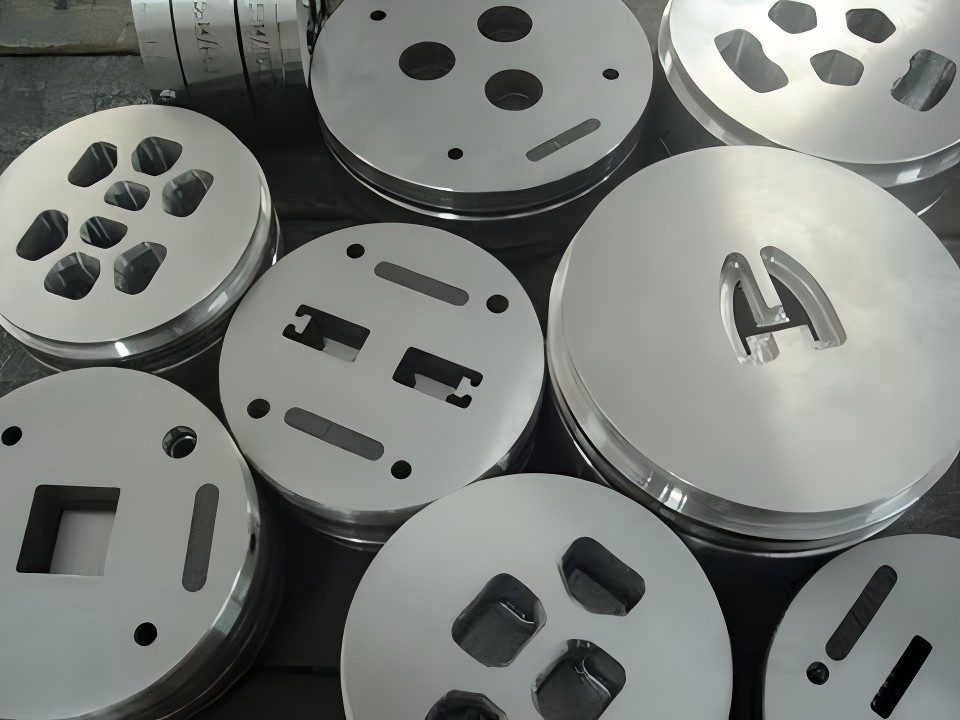
At NSPM, we supply a comprehensive range of hot work tool steels suitable for extrusion dies, containers, stems, liners, and support tooling.
With our extensive inventory and robust supply chain, we offer a comprehensive range of sizes, forged blocks, round bars, and customized products.
| Application | Condition | Recommended material | Why it works |
| Aluminum extrusion | General profiles | H13 / 1.2344 | Stable and well-balanced performance |
| Aluminum extrusion | High speed / thin sections | H11 / 1.2343 | Better heat transfer, reduced sticking |
| Aluminum extrusion | Long production runs | 1.2367 | Improved thermal fatigue resistance |
| Aluminum extrusion | Bearing / hot spots | 1.2365 (H10) | Maintains hardness under local overheating |
| Copper / brass extrusion | General dies | H13 / 1.2344 | Stable under combined thermal and mechanical load |
| Copper / brass extrusion | Heavy load / thick sections | 1.2714 | Higher toughness prevents cracking |
| Copper / brass extrusion | Severe conditions | 1.2367 | Better stability under sustained stress |
| Extrusion container | Continuous / high load | 1.2367 | High thermal fatigue resistance and structural stability |
| Extrusion container | Extreme temperature / niche applications | Inconel 718 | Maintains strength under extreme heat and long-term load |
- Note: Inconel 718 is typically used for specific high-temperature applications due to its high cost and processing complexity. For most extrusion operations, hot work tool steels remain the preferred solution.
Typical applications of our extrusion die steels
NSPM delivers reliable hot work tool steel solutions for demanding extrusion industries worldwide.
From aluminum profiles to copper extrusion tooling, we help customers achieve longer die life, stable production, and consistent performance.
Reliable die steel for flawless aluminum profile production
Aluminum profiles & architectural sections
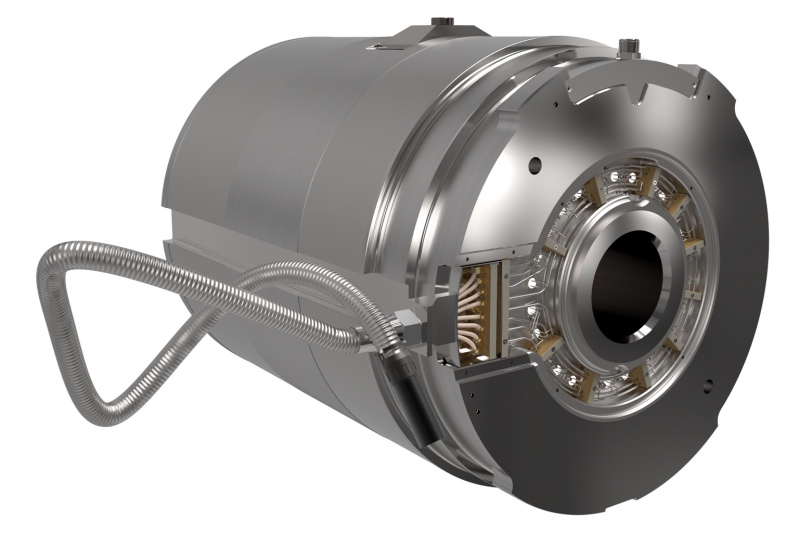
Architectural aluminum profiles require extrusion dies with excellent surface stability and resistance to thermal fatigue, especially for window frames, curtain walls, and decorative sections where surface finish is critical. For these high-speed and continuous production applications, NSPM recommends H13 / 1.2344 hot work tool steel with ESR quality to improve wear resistance, reduce aluminum pickup, and extend die life.
Engineered for precision, durability, and high-volume automotive extrusion
Automotive extrusion components
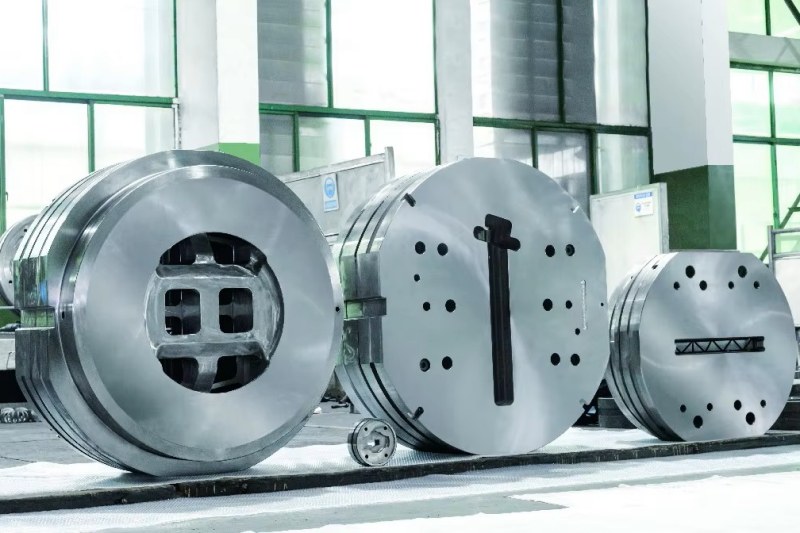
Automotive extrusion components such as EV battery housings, structural profiles, and lightweight chassis parts demand high dimensional accuracy and long production cycles. These applications often involve complex die geometries and intensive thermal cycling. NSPM recommends premium ESR or advanced remelted hot work steels with enhanced toughness and crack resistance to ensure stable production performance and reduced maintenance downtime.
Built for extreme pressure and demanding copper extrusion conditions
Copper and brass industrial parts
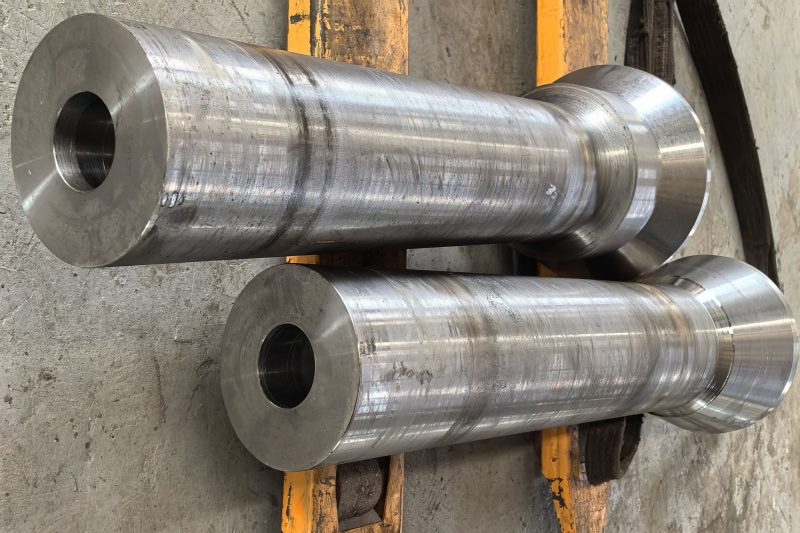
Copper and brass extrusion creates much higher pressure, friction, and thermal load compared with aluminum extrusion. Dies used for electrical conductors, heat exchanger components, and industrial brass profiles must resist deformation, thermal cracking, and loss of dimensional stability. For these demanding applications, NSPM recommends high-purity ESR and advanced remelting hot work steels that provide superior hot strength, fatigue resistance, and structural stability under extreme operating conditions.
aluminum vs copper extrusion — different demands on die steel
Aluminum and copper extrusion place very different demands on die steel performance.
NSPM helps customers select the right hot work steel based on temperature, pressure, wear behavior, and production conditions.
tool steel for aluminum extrusion dies
Aluminum extrusion die requires tool steel with excellent thermal fatigue resistance and stable surface performance during high-speed continuous production. Key requirements include:
- Operating temperature typically between 450–550°C
- High extrusion speed and long production cycles
- Strong risk of aluminum pickup and surface sticking
- High demand for profile surface finish and dimensional accuracy
Aluminum Extrusion: wear resistance, anti-sticking behavior, thermal stability
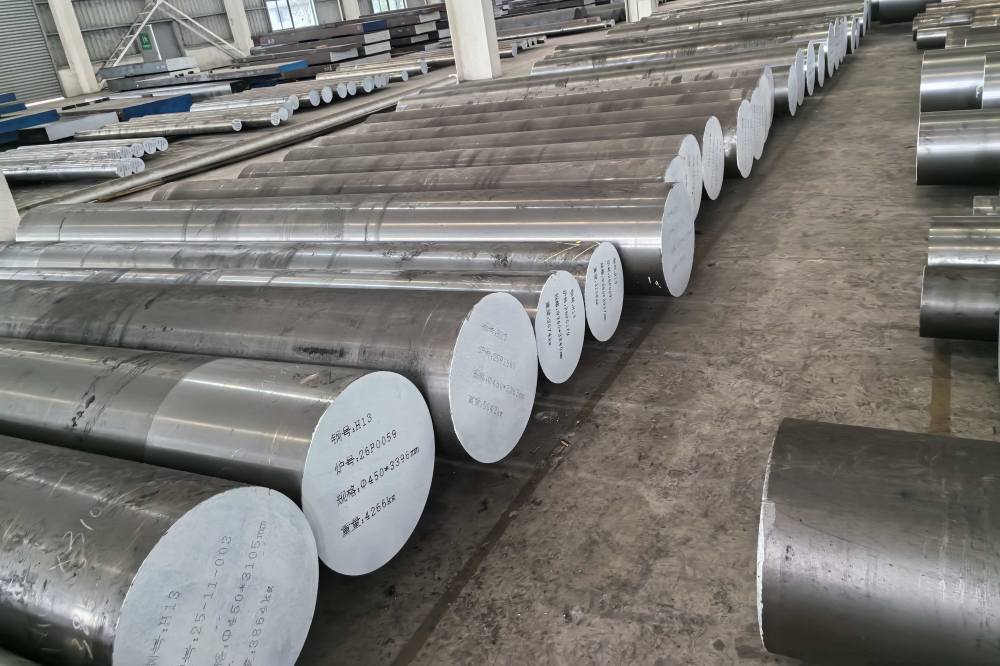
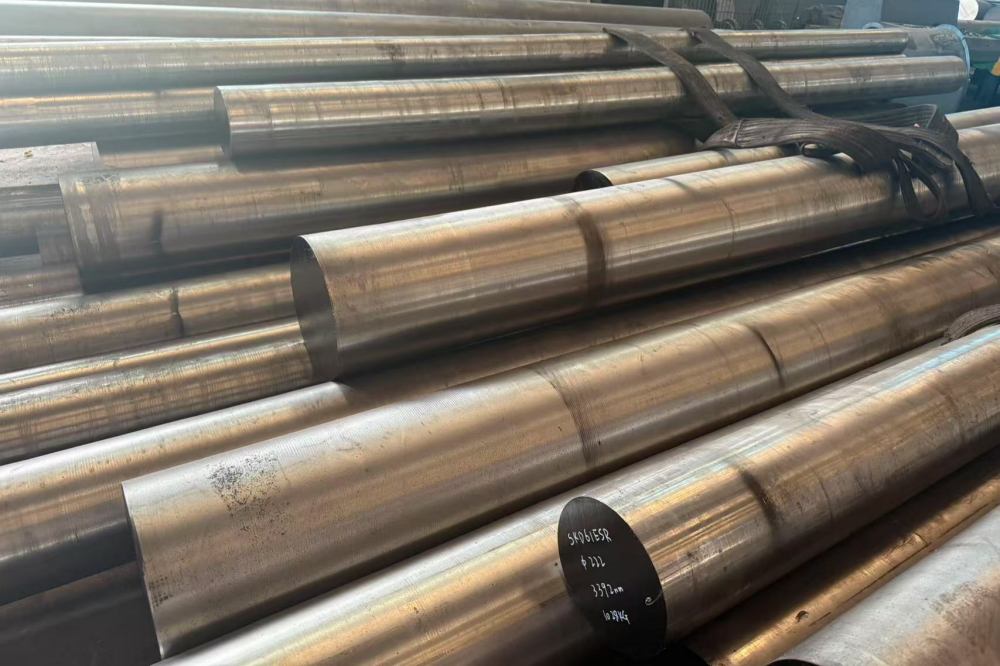
For these applications, NSPM recommends H13 / 1.2344 hot work tool steel, especially ESR-quality grades for improved cleanliness and longer die life. ESR material helps reduce surface degradation, improve polishing performance, and enhance resistance to heat checking during continuous extrusion operation.
tool steel for copper / brass extrusion dies
Copper and brass extrusion creates much more severe mechanical stress on tooling compared with aluminum extrusion. The die steel must withstand higher load and thermal pressure. Main challenges include:
- Higher deformation resistance of copper alloys
- Greater local temperature and extrusion pressure
- Slower production speed but heavier mechanical demand
- Increased risk of deformation, cracking, and dimensional instability
Copper / Brass Extrusion: hot strength, toughness, resistance to deformation
For these demanding applications, NSPM recommends premium ESR and advanced remelted hot work tool steels with superior toughness and hot strength. These high-purity materials provide better resistance to thermal cracking and structural deformation, helping extrusion manufacturers achieve more stable production and longer tooling service life.
Material Behavior in Real Production
The difference between aluminum extrusion and copper extrusion becomes especially clear when analyzing real production failure modes.
- In aluminum extrusion, dies usually fail gradually. Common problems include surface wear, aluminum sticking, heat checking, and progressive surface degradation. The tooling may continue operating for some time, but profile quality slowly declines as the die surface deteriorates.
- In copper and brass extrusion, failures are often more aggressive and structurally severe. Dies are more likely to experience deformation, cracking, and loss of dimensional stability due to the much higher mechanical and thermal loads involved.
This is why selecting the correct tool steel solution should never be based on hardness alone. At NSPM, we help customers match the tool steel to the actual material behavior and failure mode encountered in production. By understanding how different non-ferrous materials interact with extrusion tooling, we provide more reliable hot work steel solutions that improve die life, production stability, and overall manufacturing efficiency.
Tool Steel Quality Levels:
What Makes the Difference
In extrusion tooling, higher steel cleanliness often translates directly into longer die life, improved surface finish, and more reliable production performance. At NSPM, we supply multiple quality levels of hot work tool steel to meet different extrusion production requirements, from standard industrial applications to high-end precision extrusion tooling.
Standard Quality
NSPM supplies standard-quality hot work tool steels for general extrusion applications and medium production volumes. These materials provide stable mechanical performance and cost-effective solutions for conventional aluminum extrusion dies and tooling components.
- Suitable for general extrusion applications
- Stable performance for medium production runs
- Cost-effective solution for standard tooling requirements
ESR (Electroslag Remelting)
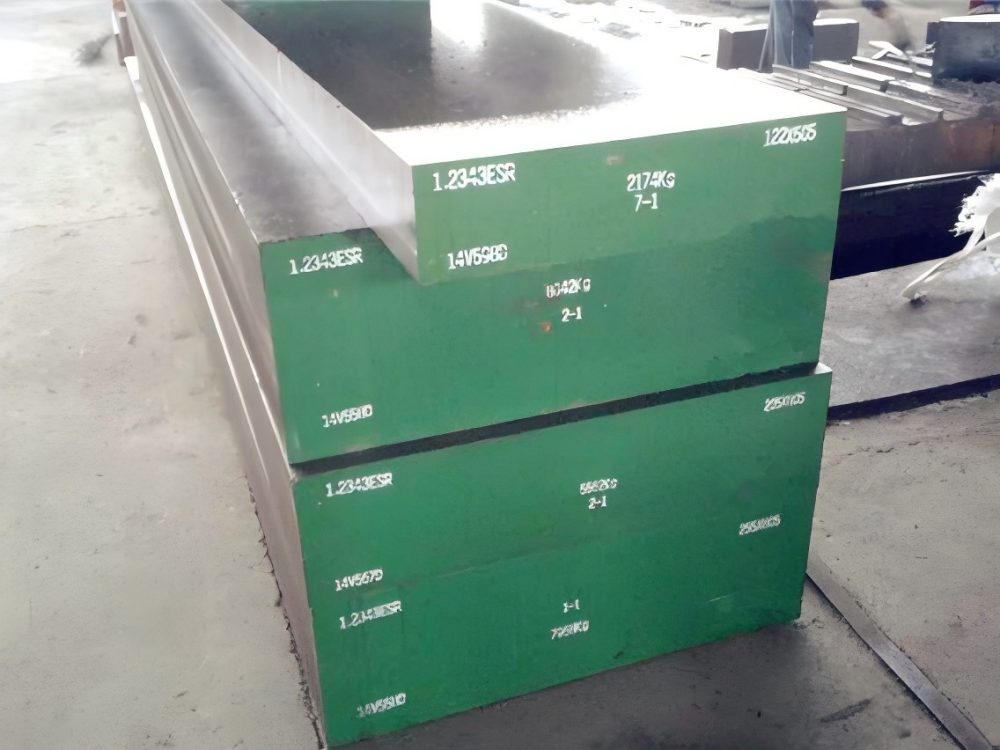
For high-speed extrusion and long continuous production cycles, NSPM offers ESR-quality hot work tool steels with improved cleanliness and structural consistency. ESR material is widely used for aluminum extrusion dies requiring better fatigue resistance and more stable die performance.
- Improved steel cleanliness and homogeneity
- Better thermal fatigue resistance
- More consistent performance during long production runs
- Reduced risk of cracking and premature die failure
High-Purity Quality (VAR / Advanced Remelting)
NSPM also supplies high-purity hot work tool steels produced through VAR and advanced remelting technologies for demanding extrusion applications. These premium-quality materials are ideal for surface-critical profiles, precision extrusion tooling, and severe operating conditions.
- Lower inclusion level and higher steel purity
- Improved surface quality of extruded products
- Reduced defect risk and better dimensional stability
- Recommended for high-end extrusion applications
Heat Treatment and Surface Engineering by NSPM
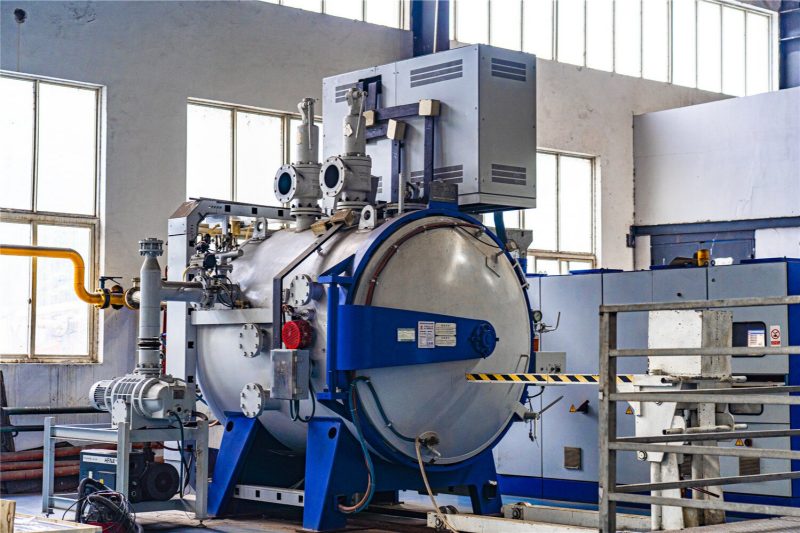
At NSPM, we understand that selecting the right steel grade is only the first step—true die performance depends on precise process control. We supports extrusion dies with:
- Optimized quenching and tempering
- Vacuum heat treatment
- Nitriding and surface treatment for wear and anti-sticking
- Process recommendations based on alloy type and extrusion speed
Why choose NSPM as your tool steel manufacturer
NSPM — Your Reliable Partner for Hot Work Tool Steel in Extrusion
Practical understanding of aluminum vs copper extrusion behavior
Proven solutions based on real production conditions
Ability to match steel grade + metallurgical quality + process
Stable supply and consistent quality