



Cold work tool steel is a category of high-carbon, high-alloy tool steel engineered for cutting, stamping and forming operations at room temperature. Defined by high surface hardness, excellent wear resistance and strong compressive strength, it is the most widely consumed tool steel segment, accounting for 28% of the global tool steel market — ahead of hot work (22%) and plastic mold steel (16%).
Key Takeaways
- Cold work tool steel is used for tooling that operates at room temperature without external heating.
- High hardness, wear resistance, and compressive strength make it ideal for stamping, blanking, and forming applications.
- D2, DC53, A2, and O1 are among the most commonly used cold work tool steel grades.
- D-series steels prioritize wear resistance, while A-series and O-series offer better toughness and machinability.
- Cold work tool steel is widely used in automotive, metal fabrication, aerospace, and industrial manufacturing industries.
- Selecting the correct grade depends on production volume, impact load, wear conditions, and dimensional accuracy requirements.
What Is Cold Work Tool Steel?

Core Definition & Working Characteristics
Cold work tool steel refers to tool steel grades used to manufacture tooling that operates without external heating, typically at ambient workshop temperatures. Its primary function is to shape or cut softer workpiece materials such as sheet metal, without losing its edge or dimensional accuracy under repeated mechanical pressure.
Key performance attributes include:
- High surface hardness to retain sharp cutting edges
- Excellent abrasion resistance to withstand long production runs
- High compressive strength to resist deformation under stamping loads
- Controlled toughness to avoid chipping under impact loads
These properties come from a carefully balanced alloy formula, with carbon content ranging from 0.5% to 1.6% and alloying elements including chromium, molybdenum and vanadium. The high carbon content forms hard carbides in the steel matrix, while alloy elements improve hardenability and refine internal structure.
Cold Work vs. Hot Work Tool Steel: Key Differences
Cold work and hot work tool steels are formulated for fundamentally different operating temperatures, resulting in very different alloy designs and performance priorities.
| Characteristic | Cold Work Tool Steel | Hot Work Tool Steel |
|---|---|---|
| Carbon Content | High (0.5%–1.6%) | Medium |
| Core Alloy System | High Cr, Mo, V for wear resistance | W, Mo for high-temperature thermal stability |
| Performance Focus | Hardness, wear resistance, compressive strength | Hot strength, thermal fatigue resistance |
| Working Temperature | Ambient / room temperature | Up to 500–700°C continuous |
| Typical Applications | Stamping dies, blanking tools, shear blades | Hot forging dies, die casting molds, extrusion tooling |
Tip: Always select tool steel based on the actual working temperature and load conditions. NSPM’s metallurgical engineers can provide grade selection guidance tailored to your specific process.
Key Properties of Cold Work Tool Steel

Hardness and Wear Resistance
High hardness and wear resistance are the defining advantages of cold work tool steel. After standard heat treatment, mainstream grades reach 58–63 HRC, enabling tools to maintain sharp edges and precise geometry through millions of stamping or cutting cycles.
Wear resistance comes primarily from hard carbide particles formed by carbon and alloying elements such as chromium and vanadium. Higher carbide volume improves abrasion resistance but typically reduces impact toughness. For high-volume production, surface treatments such as nitrocarburizing can further reduce friction and extend tool service life by 3–5 times.
Compressive Strength and Toughness
Cold work tooling is subject to heavy compressive loads during stamping and forming. High compressive strength prevents permanent deformation of the die cavity or cutting edge, while balanced toughness reduces the risk of chipping and cracking under intermittent impact loads.
There is an inherent trade-off between hardness and toughness: higher-hardness grades like D2 offer superior wear resistance but lower impact toughness, while general-purpose grades like A2 strike a balance between the two for versatile use.
Role of Key Alloying Elements
| Alloy Element | Function in Cold Work Tool Steel |
|---|---|
| Carbon | Forms hard carbides to boost hardness and wear resistance |
| Chromium | Improves hardenability and forms chromium carbides for enhanced abrasion resistance |
| Molybdenum | Enhances through-hardening performance and tempering stability for uniform hardness across thick sections |
| Vanadium | Forms fine, hard vanadium carbides to improve wear resistance and refine grain structure |
Note: Chromium in cold work tool steel is primarily bonded as carbides for wear resistance, not for corrosion protection. Cold work tool steel does not provide stainless-level rust resistance and requires basic anti-corrosion storage and maintenance.
Common Types and Grades of Cold Work Tool Steel
O, A, and D Series Tool Steels
Cold work tool steels are grouped into three main families based on hardening method and alloy system:
- O series (oil-hardening): Harden by oil quenching, offering good toughness and machinability for low- to medium-volume tooling.
- A series (air-hardening): Harden in still air, with minimal heat treatment distortion and balanced wear resistance and toughness, ideal for precision dies.
- D series (high-chromium): High carbon, high chromium grades with exceptional wear resistance, designed for high-volume, high-abrasion production runs.
Mainstream Grade Comparison
| Grade | Wear Resistance | Toughness | Typical Hardness (HRC) | Primary Applications |
|---|---|---|---|---|
| D2 | Very High | Low | 54–61 | High-wear blanking dies, shear blades, woodworking cutters |
| DC53 | Excellent | Moderate | 62–64 | Heavy-duty stamping punches, high-precision blanking dies |
| A2 | Moderate | Balanced | 57–62 | General-purpose forming dies, bending dies, gauges |
| O1 | Fair | Good | 59–63 | Low-volume blanking dies, hand tools, gauges |
Selecting the appropriate grade directly impacts tool service life and production uptime. For high-abrasion, low-impact scenarios, D2 is the most cost-effective choice; for dies subject to moderate impact, A2 provides a better balance of performance and service life.
Industrial Applications of Cold Work Tool Steel
Stamping and Blanking Dies
Stamping and blanking are the largest application segments for cold work tool steel. Factories use A2, D2 and DC53 to manufacture sheet metal stamping dies, punching punches and trimming dies. High hardness ensures long cutting edge life, while controlled toughness reduces chipping during high-speed stamping.
Forming and Cutting Tooling
Cold work tool steel is also widely used for:
- Cold forming rolls and bending dies for sheet metal fabrication
- Industrial shear blades and slitting knives for metal sheet processing
- Broaches, taps and thread rolling dies for fastener and precision machining industries
- Hand tools, woodworking cutters and industrial knife blades
Key Industry Sectors
| Industry Sector | Typical Cold Work Tooling |
|---|---|
| Automotive | Body panel stamping dies, chassis component punching tools |
| Industrial Machinery | Precision gauges, jigs, fixtures and general tooling |
| Metal Fabrication | Shear blades, slitting knives, forming rolls |
| Aerospace | Precision sheet metal forming tools, small blanking dies |
The dimensional stability of air-hardening grades like A2 makes them particularly suitable for precision tooling that requires tight geometric tolerances.
Conclusion
Cold work tool steel is the foundational material for room-temperature metal cutting and forming, defined by its high hardness, excellent wear resistance and strong compressive strength. With three core alloy families and multiple specialized grades, it supports a wide range of industrial applications from automotive stamping to precision metal fabrication.
Unlike hot work tool steel optimized for high-temperature processes, cold work grades are engineered specifically for ambient-condition performance, with clear trade-offs between wear resistance and toughness to match different workload priorities.
FAQ
What is cold work tool steel used for?
Cold work tool steel is used to manufacture tools for cutting, stamping, blanking and forming materials at room temperature. It is widely applied to dies, punches, shear blades and precision tooling that require high hardness and wear resistance.
What makes cold work tool steel hard and wear-resistant?
High carbon content and alloying elements such as chromium and vanadium form hard carbide particles in the steel matrix. Proper quenching and tempering heat treatment locks in this hardness and wear resistance for stable tool performance.
Which industries use cold work tool steel most heavily?
The automotive, metal fabrication and general manufacturing sectors are the largest consumers, relying on cold work tool steel for sheet metal stamping, cutting and forming operations. Aerospace and precision engineering also use these grades for high-tolerance tooling.
How does NSPM help customers select the right cold work grade?
NSPM’s technical team evaluates your specific working conditions — including workpiece material, production volume, impact load and tolerance requirements — to recommend the most cost-effective grade and heat treatment specification.
What product forms does NSPM offer for cold work tool steel?
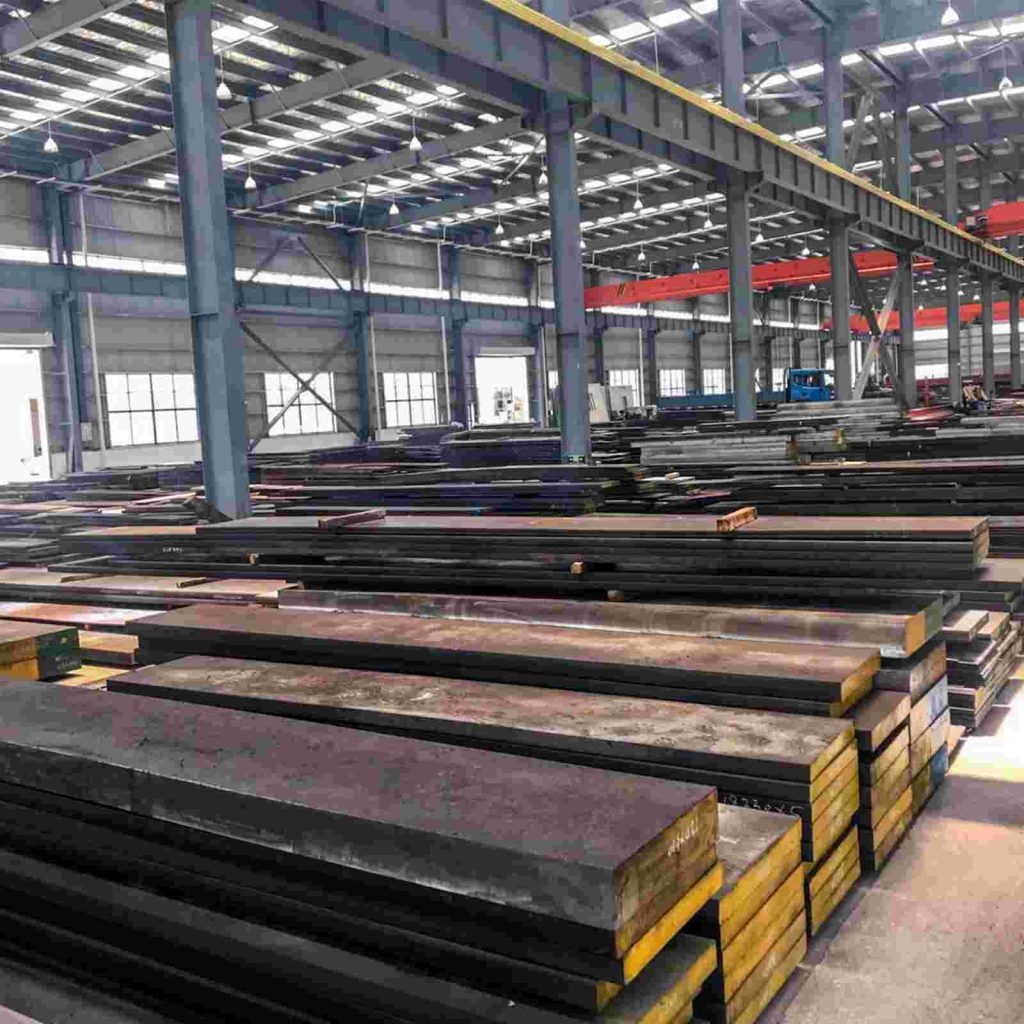
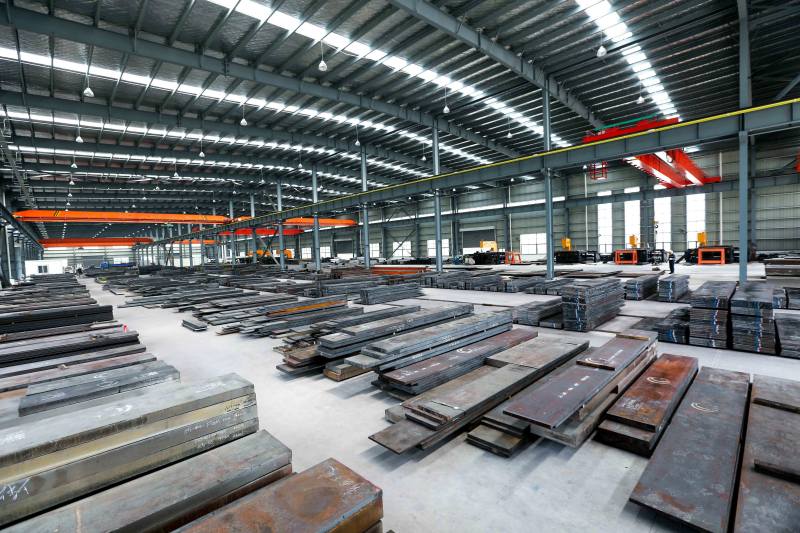
NSPM supplies cold work tool steel in round bars, flat bars, plates and custom forged blocks, with optional rough machining and heat treatment services to fit different tool manufacturing workflows.