

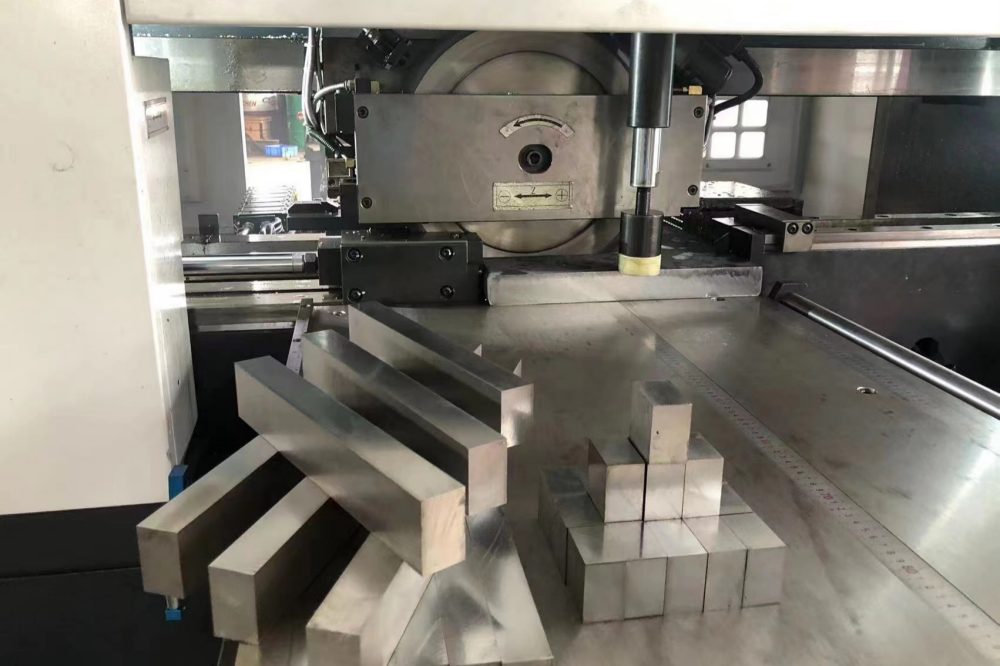




For handheld woodworking circular saws, a DIY bench saw conversion is technically possible for very small, light-duty hobby projects, but it comes with significant tradeoffs in accuracy, stability and safety. This makeshift setup is never a replacement for a purpose-built table saw in regular woodworking. For industrial steel processing, handheld circular saw conversions are completely unsuitable — professional CNC circular sawing machines such as NHC models are required for safe, high-volume metal cutting.
Key Takeaways
- A handheld circular saw can be mounted upside down as a basic makeshift bench saw for occasional small DIY wood cuts, but strict safety precautions and secure mounting are mandatory.
- DIY conversions disable most factory safety features (including anti-kickback mechanisms), greatly increasing injury risk, and will void the manufacturer warranty.
- For woodworking, track saws or entry-level benchtop table saws are far safer, more accurate and more reliable alternatives to a homemade setup.
- For industrial steel plate, bar and tube processing, handheld circular saws of any kind are not appropriate; dedicated CNC circular sawing machines are required for precision, efficiency and workplace safety.
- NHC CNC circular sawing machines are purpose-built for high-volume steel processing, delivering tight tolerances, automated operation and long service life for industrial manufacturing.
Can a Circular Saw Be Used as a Bench Saw?
Circular Saw vs. Bench Saw: Core Differences
While both tools use a rotating circular blade, they are engineered for entirely different operating principles and use cases.
A purpose-built bench (table) saw features a fixed blade protruding upward through a precision-machined table surface. The user feeds the workpiece across the table into the blade, with integrated rip fences, miter slots, riving knives and anti-kickback pawls for repeatable accuracy and built-in safety. Table saws have heavy-duty motors designed for continuous stationary use with thick lumber.
A standard circular saw is a handheld portable tool, designed to be moved along a stationary workpiece. Alignment depends entirely on the user’s hand control, with no built-in guiding system. Its core strengths are portability and on-site flexibility, not stationary precision cutting.
Is a DIY Circular Saw Bench Conversion Possible?
A conversion is technically feasible for hobbyists working on very small, thin wood projects with limited budget and space, but it is not recommended for regular use, precision joinery, thick lumber or high-volume work.
The conversion works by securing the circular saw upside down under a rigid worktable, with the blade protruding upward through a narrow slot in the tabletop. A homemade fence is then added to guide workpieces for straight cuts.
Step-by-Step Guide for Light-Duty Use Only
If you proceed with a DIY setup, follow these steps to minimize risk:
- Use a rigid, flat worktable made from at least ¾-inch thick plywood to prevent flexing under load.
- Cut a narrow, precise slot in the tabletop sized only for the blade and its guard, with no extra clearance that could trap workpieces.
- Bolt the saw firmly to the underside of the table with heavy-duty hardware. Clamps alone are not secure enough for safe operation.
- Verify the blade is perfectly perpendicular to the table surface and aligned straight along the cut path.
- Mount a sturdy, straight rip fence parallel to the blade for consistent workpiece guidance.
- Set blade depth to extend roughly 1/8 inch above the thickness of the workpiece.
- Test the full setup on scrap wood first, checking for vibration, shifting and smooth operation before cutting project material.
Never remove or modify the factory blade guard as part of the conversion.
Key Limitations & Safety Risks of DIY Circular Saw Conversions
Performance Limitations
- Poor repeatable accuracy: Without factory-machined miter slots and a calibrated fence, it is extremely difficult to achieve consistent, square cuts across multiple workpieces.
- Limited cutting capacity: Handheld saw motors are not designed for continuous stationary use. Cutting thick hardwood repeatedly can cause motor overheating, stalling and premature wear.
- High vibration: Unbalanced mounting leads to vibration that degrades cut quality and loosens hardware over time.
Critical Safety Risks
- Most factory safety features — including riving knives and anti-kickback pawls — cease to function in an upside-down orientation. This drastically raises the risk of dangerous kickback, which can cause severe lacerations or eye injury.
- A poorly secured saw can vibrate loose mid-cut, resulting in unintended blade contact.
- The power switch is often hard to reach quickly in an emergency.
- All tool warranties are voided by modification, and the user assumes full liability for any injuries or property damage.
Better Alternatives to DIY Circular Saw Bench Setups

For Woodworking & DIY Projects
For regular woodworking use, these options deliver far better safety and performance than a homemade conversion:
- Guided track saw systems Track saws ride along a rigid aluminum guide rail to deliver perfectly straight, splinter-free cuts. They remain fully portable, have lower kickback risk than a DIY bench saw, and produce cleaner, more consistent results for sheet goods and panel breakdown.
- Purpose-built table saws Factory-engineered table saws are available for every budget, with integrated safety features that no DIY build can match:
- Benchtop table saws ($100–$300): Compact, affordable for hobbyists
- Jobsite table saws ($300–$800): Durable for regular construction use
- Cabinet table saws ($2,000+): Professional-grade precision for high-volume woodworking
For Industrial Steel Processing

If you are looking for a stationary circular saw solution for metal manufacturing, handheld woodworking or general-purpose saws are never appropriate. For high-volume steel plate, bar, tube and profile processing, NHC CNC circular sawing machines are the professional industrial alternative.
Purpose-built exclusively for steel processing, NHC machines deliver:
- Precision cutting with ±0.2mm length tolerance and perpendicularity ≤0.3mm/100mm for burr-free, ready-to-use blanks
- Automated magazine loading and CNC-controlled feeding for uninterrupted high-volume production
- Oil mist cooling systems to extend blade service life and reduce consumable costs
- Enclosed cutting zones, secure double clamping and built-in safety valves for compliant, safe industrial operation
- Models optimized for thick steel plate, solid bar stock, heavy-wall tubing and structural profiles
NHC machines serve steel service centers, automotive component manufacturers, forging facilities, oil and gas equipment makers and heavy machinery production lines worldwide.
Conclusion
Converting a handheld circular saw into a bench saw is a temporary, low-cost DIY workaround only for very small woodworking hobby projects, and it carries notable safety risks and performance limits. It is never a reliable long-term replacement for a purpose-built table saw.
For woodworking, a track saw or entry-level benchtop table saw is a far more practical, safe and accurate investment. For industrial steel processing, handheld saws of any kind are unsuitable — NHC CNC circular sawing machines deliver the precision, automation and safety required for professional, high-volume steel manufacturing. Always use tools for their intended purpose and follow all manufacturer safety guidelines.
FAQ
Can you use a circular saw as a bench saw for metal?
Handheld circular saws with metal-cutting blades can make occasional thin-gauge metal cuts, but a homemade bench saw setup is never recommended for metal work. Hot flying chips, spark hazards and lack of proper guarding create severe safety risks. For industrial steel processing, use a dedicated CNC metal circular sawing machine such as NHC models.
What safety gear is required for a homemade bench saw setup?
At minimum, wear ANSI-approved safety glasses, hearing protection and a dust mask. Use a push stick for all narrow cuts to keep hands away from the blade. Avoid loose clothing and tie back long hair to prevent entanglement.
How do you keep cuts straight with a homemade bench saw?
Use a rigid, securely mounted rip fence aligned perfectly parallel to the blade. Test and adjust alignment on scrap wood before each use. Even with a well-built setup, accuracy will not match a factory-manufactured table saw.
Is a homemade bench saw suitable for large production projects?
No. DIY setups are only appropriate for small, occasional hobby cuts. Large projects, thick material or repeated production runs require the power, stability and safety of a purpose-built saw. For industrial metal production, use dedicated CNC circular sawing equipment.
Can a circular saw fully replace a bench saw for all work?
No. While handheld circular saws are versatile for on-site crosscuts and sheet breakdown, they cannot match the precision, consistency and safety of a dedicated bench saw for rip cuts, joinery and stationary production work. For industrial metal processing, the gap is even larger — professional CNC sawing equipment is required.