

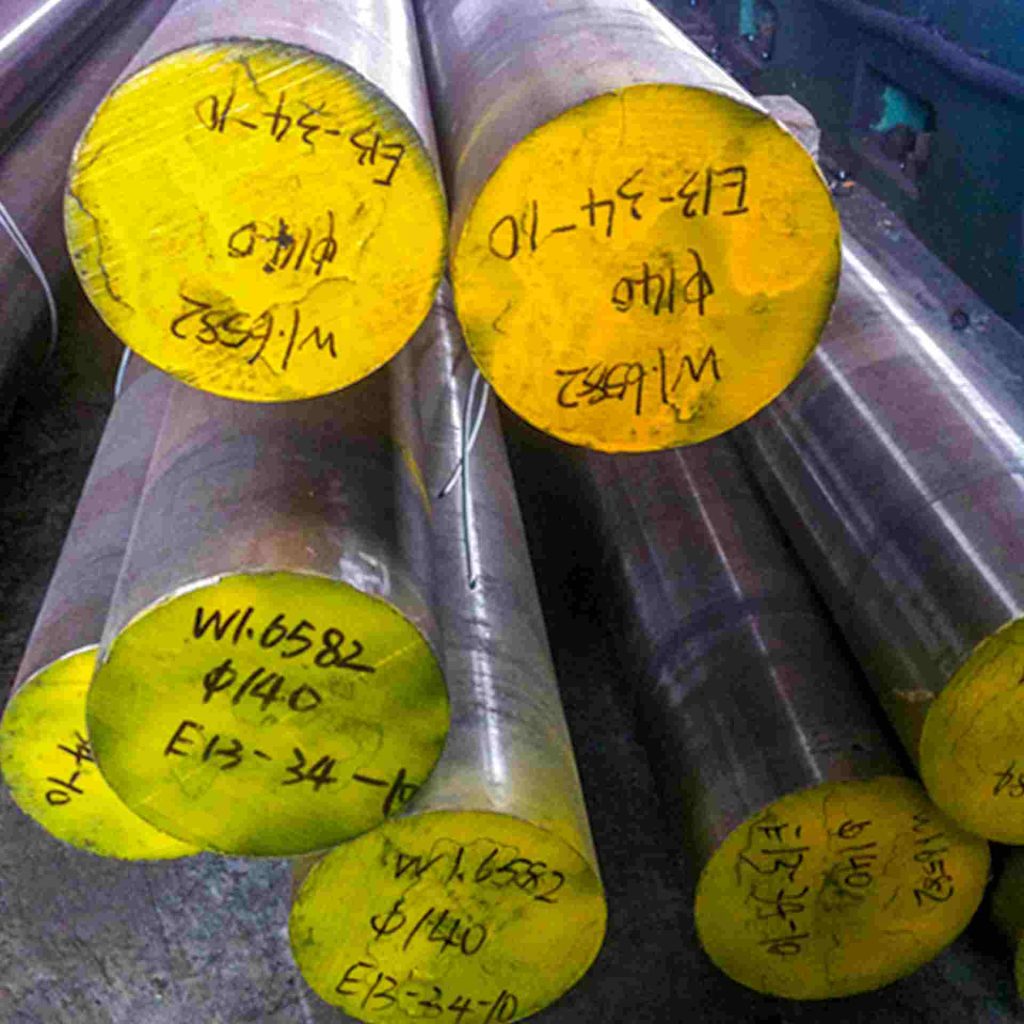
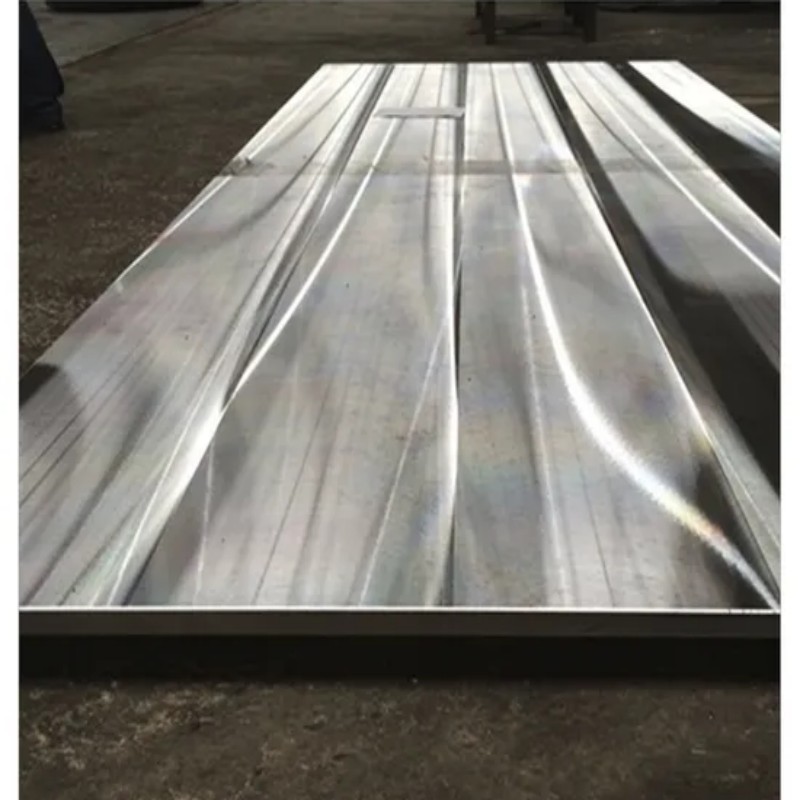
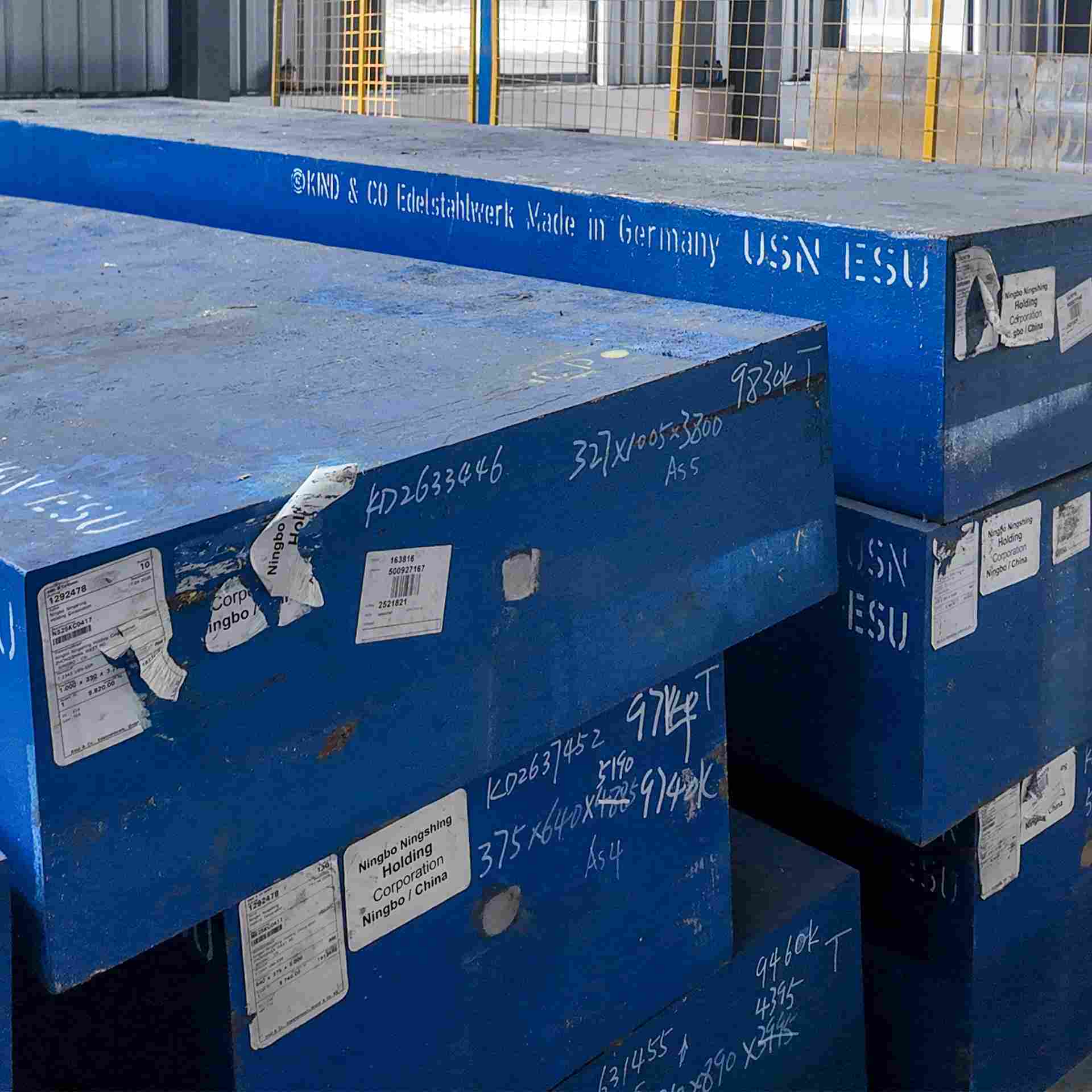
Through hardening, 4340 alloy steel reaches 52–56 HRC after quench and temper. Nitriding or carburizing raises case hardness to 58–62 HRC. For 4340, the highest hardness depends on the hardening method. Heat treating 4340 steel controls the result. As-quenched 4340 is brittle. Tempering 4340 lowers hardness by about 8–15 HRC, so parts get tempered before use.
Key Takeaways
- 4340 steel reaches 52–56 HRC when through-hardened, and up to 62 HRC with surface treatments like nitriding.
- Tempering after quenching lowers hardness but increases toughness. This trade-off lets you match the steel to the application.
- Choose the right hardness for the job—not just the highest number—to get the best performance.
What Determines the Hardness of 4340 Steel?
Alloying Elements and Hardenability
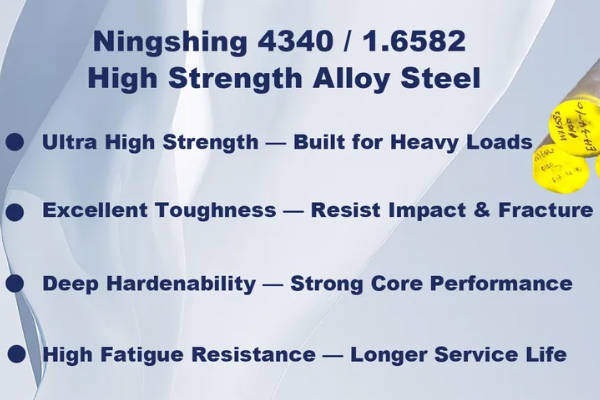
4340 alloy steel contains nickel, chromium, and molybdenum. These elements make it harden more deeply than 4140. The added nickel lets 4340 through-harden in sections over 100 mm, while 4140 begins losing core hardness above roughly 30 mm. Nickel, chromium, and molybdenum work together to allow a full martensitic change through sections thicker than 4 inches. When quenched in oil or polymer, the temperature drops fast enough to stop pearlite and bainite from forming. The result is a fully martensitic microstructure with a hardness of 54–57 HRC through sections up to 4 inches across. This deep hardenability makes 4340 a common choice for open die forgings and heavy-section bars that require uniform properties from surface to core.
The carbon content of about 0.40% sets the top limit on how hard it can get. More carbon would increase hardness but reduce weldability and toughness. This balance makes 4340 a flexible choice where both strength and core toughness matter.
Balance of Strength and Toughness
4340 steel gives a balance of strength and toughness. The trade-off becomes clear when you look at Charpy V-notch impact energy values. At 52.2 HRC, impact energy is about 24.74 J; at 52.3 HRC, it is about 25.75 J. Tempering temperature controls these properties. Low-temperature tempering makes fine carbide precipitates with high strength but limited ductility. Medium-temperature tempering gives a compromise. High-temperature tempering leads to carbide coarsening, which boosts toughness but lowers strength. This makes 4340 a go-to for aerospace, automotive, and energy parts.
Hardness Ranges of 4340 Steel by Condition
Annealed and Normalized
Annealed 4340 has a Brinell hardness of about 217 HB (approximately 17 HRC). Normalizing brings it to about 360 HB. These soft states let shops cut, drill, and mill the alloy before final hardening.
As-Quenched Hardness
Quenching from 830–860 °C gives the highest hardness. Oil quenching from about 845 °C typically produces 54–57 HRC. Thin sections reach the higher end. This top as-quenched hardness stays the same regardless of section size. Section size decides whether that hardness holds evenly across the whole cross-section. Parts up to 150 mm and larger keep a hard martensitic core because of the nickel content.
Tempered Hardness
Through hardening by quench and temper lands between 24 and 53 HRC depending on temper temperature. A typical oil quench plus temper gives a uniform 52–54 HRC. Case hardening pushes surface hardness higher. Nitriding reaches up to 60 HRC. Carburizing or nitriding creates case hardness of 58–62 HRC at controlled depths.
| Parameter | Typical Specification |
|---|---|
| Effective case depth | 0.75 mm to 2.0 mm |
| Surface hardness | 58–63 HRC |
| Core hardness | 30–40 HRC |
How Heat Treatment Affects 4340 Hardness
Austenitizing and Quenching
For 4340, hardening begins with austenitizing. Parts are heated to 1500–1550 °F (815–845 °C) and held long enough for carbon to fully dissolve into austenite. The choice of quenching media controls cooling severity. Water cools fast but causes thermal shock. Oil is less severe but may weaken hardening in sections beyond 50 mm. Polymer blends both.
Tempering Temperature and Hardness Trade-Off
After quenching, tempering lowers hardness. Higher tempering temperature gives lower hardness but more toughness. The quench and temper process for 4340 yields 52–56 HRC. For high fatigue strength, normalize, quench, and temper at 400 °C, giving 42–48 HRC. For the best balance, temper at 600 °C, giving 28–35 HRC.
| Tempering Type | Temperature Range | Hardness Range | Typical Applications |
|---|---|---|---|
| Low-temp | 200–300 °C | 48–55 HRC | Gears and dies |
| Medium-temp | 350–500 °C | 38–48 HRC | Springs and shafts |
| High-temp (Q&T) | 540–680 °C | 28–38 HRC | Landing gear, axle shafts |
AISI 4340 can become brittle when tempered between 250–400 °C and 450–550 °C. After high-temperature tempering, fast cooling through these ranges stops brittleness. The molybdenum in 4340 helps prevent embrittlement.
Specifications and Practical Hardness Limits
AMS 6414 and AMS 6415
Engineers use AMS 6414 and AMS 6415 to set acceptable properties. AMS 6414 covers normalized and tempered 4340. AMS 6415 covers quenched and tempered material. These standards give hardness limits for each condition.
Typical Applications and Hardness Targets
4340 is used for gears, shafts, axles, landing gear, and other high-stress parts. In tooling, 4340 can be used for die casting dies and other molds where toughness is needed. It is also compared with tool steel grades, though tool steels generally offer higher wear resistance. For parts needing maximum hardness, surface treatments like nitriding are applied.
FAQs About 4340 Steel Hardness
What is the maximum hardness of 4340 steel?
Through-hardened 4340 reaches 52–56 HRC. With nitriding or carburizing, case hardness can reach 58–62 HRC.
Can 4340 be hardened to 60 HRC?
Yes, but only at the surface through nitriding or carburizing. Through-hardening alone does not reach 60 HRC.
How does tempering affect 4340 hardness?
Tempering lowers hardness by 8–15 HRC from the as-quenched state. Higher tempering temperatures reduce hardness further but increase toughness.