
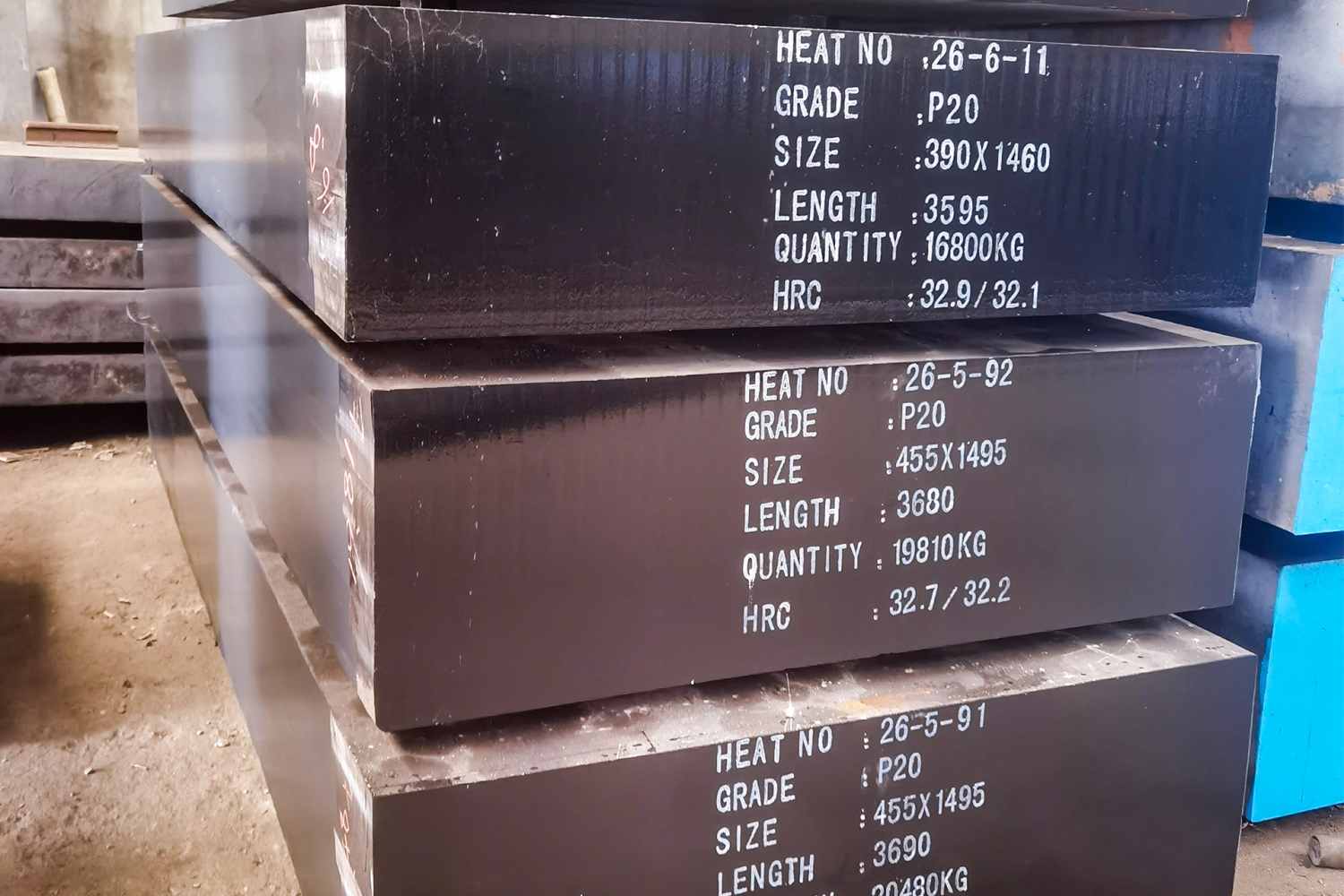

P20 and 4140 are both chromium-molybdenum low-alloy steels with overlapping basic mechanical properties, but they are engineered for entirely different industrial applications and cannot be freely interchanged. While they share nearly identical elastic modulus and shear modulus — meaning they exhibit similar deformation behavior under bending and torsion — they differ notably in chemical composition, delivered condition, strength profile and core performance priorities. Selecting the correct grade based on working conditions is critical to achieving reliable performance in tooling and structural component production.
As a professional global tool and mold steel supplier, NSPM provides both P20 pre-hardened mold steel and 4140 alloy structural steel, with metallurgical technical guidance to help manufacturers match the right material to their application.
Key Takeaways
- P20 and 4140 are both chromium-molybdenum alloy steels with similar elastic properties, but they are optimized for distinct use cases.
- P20 is a pre-hardened plastic mold steel with excellent machinability and polishability, purpose-built for injection mold tooling.
- 4140 is a high-strength structural alloy steel, ideal for heavy-duty mechanical components such as gears, shafts and fasteners.
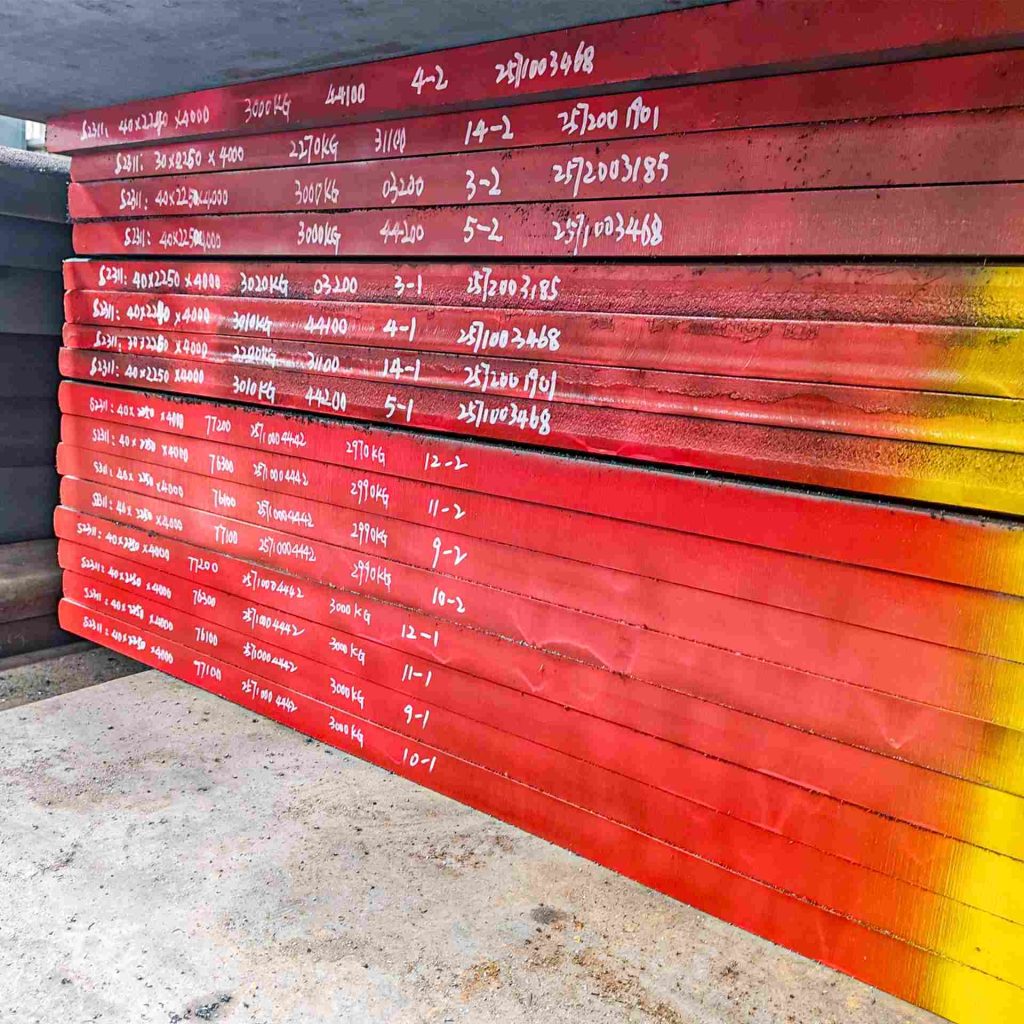
- P20 is delivered in pre-hardened condition (28–32 HRC) to skip secondary heat treatment, reducing mold manufacturing lead time.
- The two grades are not interchangeable: P20 lacks the strength for high-load structural parts, while 4140 cannot match P20’s polishability and dimensional stability for mold applications.
Core Similarities Between P20 and 4140
Both grades fall into the low-alloy chromium-molybdenum steel category, with alloying elements that improve hardenability, strength and toughness compared to plain carbon steel.
The most notable similarity is their nearly identical elastic modulus (~207 GPa) and shear modulus, meaning they behave almost identically under bending, twisting and elastic loading. Both grades also offer good machinability in their respective delivered conditions, and are widely available across global industrial supply chains for general manufacturing use.
How the Chemical Composition of P20 and 4140 Steel Differs

The difference in alloy formula is the root cause of their divergent performance. P20 is formulated for mold-making performance, while 4140 is tuned for high structural strength.
| Alloy Element | P20 Steel | 4140 Steel |
|---|---|---|
| Carbon (C) | 0.28 – 0.40% | 0.38 – 0.43% |
| Chromium (Cr) | 1.40 – 2.00% | 0.80 – 1.10% |
| Manganese (Mn) | 0.60 – 1.00% | 0.75 – 1.00% |
| Molybdenum (Mo) | 0.30 – 0.55% | 0.15 – 0.25% |
| Silicon (Si) | 0.20 – 0.80% | 0.15 – 0.30% |
Key compositional distinctions:
- P20 has higher chromium and molybdenum content, supporting better through-hardening for thick mold sections and improved corrosion resistance relative to 4140.
- 4140 has slightly higher carbon and manganese content, prioritizing tensile strength and surface hardness for structural load-bearing parts.
- Standard P20 does not contain nickel; nickel-alloyed P20 variants are specialized modified grades for extra-large mold blocks.
Mechanical Property Differences Between P20 and 4140 Steel

Hardness and Strength
The two grades differ significantly in delivered condition and achievable strength:
- P20: Supplied in pre-hardened condition at 28–32 HRC, with tensile strength ranging from 540 to 1050 MPa depending on section size. It is designed for uniform hardness through large cross-sections to maintain dimensional stability during mold machining.
- 4140: Typically supplied in annealed condition, requiring quenching and tempering to reach target performance. After standard heat treatment, it achieves 28–45 HRC with tensile strength of 690–1080 MPa, delivering higher load-bearing capacity than P20.
Higher carbon content gives 4140 superior ultimate tensile strength and yield strength, making it suitable for parts under continuous heavy mechanical stress.
Machinability and Polishability
- Machinability: P20 offers excellent machinability in its pre-hardened state, enabling stable high-speed CNC machining with predictable tool wear. 4140 has moderate machinability in annealed condition, but becomes significantly harder to machine after full heat treatment.
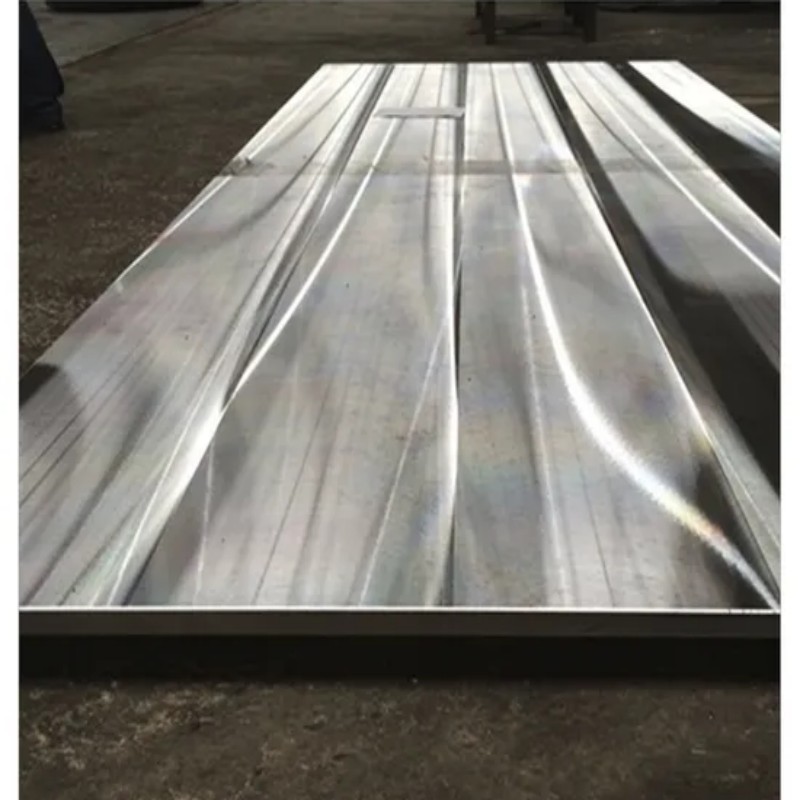
- Polishability: This is one of the most critical gaps for mold applications. P20 supports fine mirror polishing to produce smooth, glossy plastic part surfaces. 4140 has only moderate polishability and is not optimized for high-gloss mold cavity surfaces.
| Performance | P20 Steel | 4140 Steel |
|---|---|---|
| Machinability | Excellent | Moderate (annealed) / Poor (hardened) |
| Polishability | Excellent | Moderate |
| Dimensional stability | Excellent | Good |
Wear Resistance and Toughness
- Wear resistance: 4140 achieves good wear resistance after hardening, suitable for friction-exposed mechanical parts. P20 has adequate wear resistance for standard plastic molding, but is not formulated for heavy abrasive sliding wear.
- Toughness: As a mold steel, P20 is engineered with balanced toughness to resist cracking under repeated thermal cycling and clamping pressure. 4140 prioritizes ultimate strength over impact toughness, and is more prone to brittle fracture under high impact loads at full hardness.
Comparing Applications of P20 Mold Steel and 4140 Alloy Steel
Typical Applications of P20 Mold Steel
P20 is classified exclusively as a plastic mold steel, optimized for medium-volume injection molding production. Its pre-hardened delivery eliminates post-machining heat treatment, avoiding deformation risks and shortening production lead times.
Common applications:
- Plastic injection molds for automotive interiors, consumer goods and electronic housings
- Precision mold bases and mold inserts
- Low-stress forming tooling and fixture components
It is not suitable for high-temperature die casting or hot forging applications, which require dedicated hot work tool steels such as H13.
Typical Applications of 4140 Alloy Steel
4140 is a general-purpose high-strength structural alloy steel, widely used for load-bearing mechanical components that require a balance of strength and toughness.
Common applications:
- Automotive: Gears, crankshafts, camshafts, axle components
- Industrial machinery: Spindles, bolts, fasteners, hydraulic cylinders
- Oil and gas: Downhole tool components and high-pressure couplings
- Construction and agricultural equipment: Heavy-duty structural parts
Can P20 Replace 4140 (or Vice Versa)?
In most cases, the two grades are not interchangeable, as they are designed for fundamentally different operating conditions:
- P20 lacks the tensile strength and wear resistance for heavy-load structural parts like gears and shafts, and would fail prematurely under high mechanical stress.
- 4140 cannot match P20’s polishability, dimensional stability and thermal cycle toughness for plastic mold tooling, resulting in poor part surface quality and shorter mold service life.
Substitution is only acceptable for low-demand, non-critical general tooling applications, and should always be verified against engineering performance requirements.
Conclusion
While P20 and 4140 share similarities as chromium-molybdenum low-alloy steels — including nearly identical elastic deformation behavior — they are purpose-built for entirely different industrial applications and cannot be treated as direct equivalents. P20 excels as a pre-hardened plastic mold steel with superior polishability and dimensional stability, while 4140 delivers higher tensile strength for heavy-duty structural components.
Matching the correct grade to your specific working conditions ensures optimal component service life, reliable performance and lower long-term manufacturing costs. As a full-range steel supplier, NSPM provides both grades with certified quality and technical support to help manufacturers make the right material selection.
FAQ
What is the main difference between P20 and 4140 steel?
The core difference is their intended application. P20 is a pre-hardened plastic mold steel optimized for machinability, polishability and dimensional stability in injection mold tooling. 4140 is a high-strength structural alloy steel designed for heavy-load mechanical components such as gears and shafts. Their distinct alloy compositions create these specialized performance profiles.
Can P20 steel be used for making gears?
P20 is not recommended for high-load gear applications. It lacks the tensile strength and wear resistance of properly heat-treated 4140 steel, and would experience premature wear or failure under repeated heavy torque loads. 4140 is the standard grade for general-purpose industrial gears.
Why do manufacturers choose pre-hardened P20 steel?
Pre-hardened P20 eliminates the need for secondary heat treatment after mold machining, which saves production time, avoids heat-induced dimensional deformation, and reduces total mold manufacturing costs. Its consistent through-hardness also ensures stable machining performance.
Is 4140 steel easy to machine?
4140 has moderate machinability in its soft annealed delivered state. Once fully quenched and tempered to high hardness, it becomes significantly more difficult to machine, requiring specialized cutting tools and reduced feed rates. In comparison, P20 offers more consistent, reliable machinability in its standard working hardness range.