
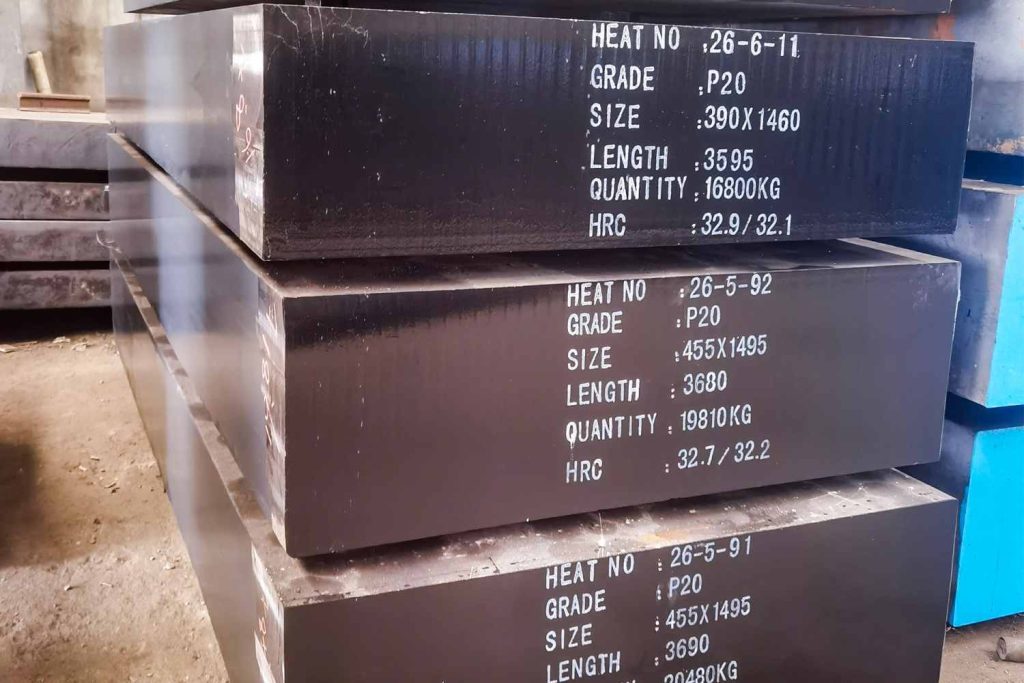
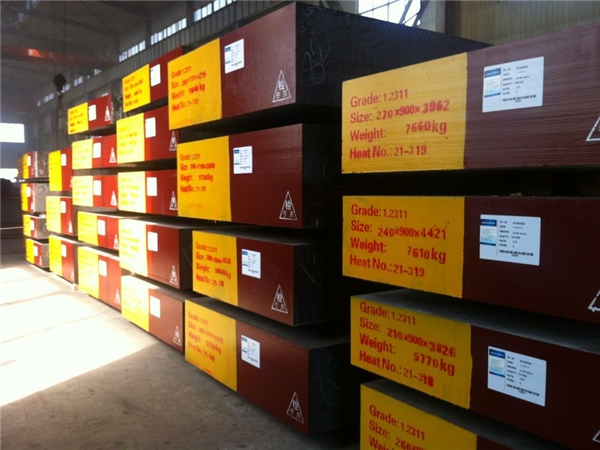
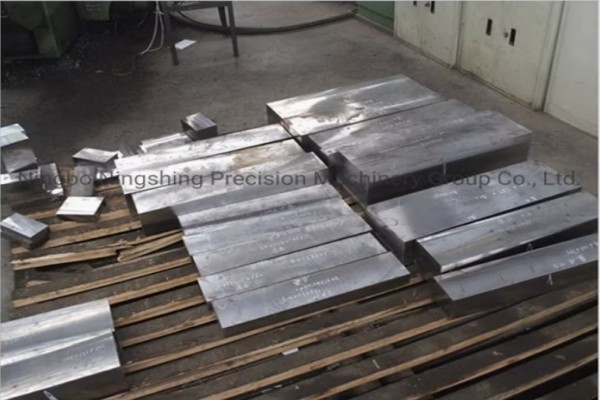
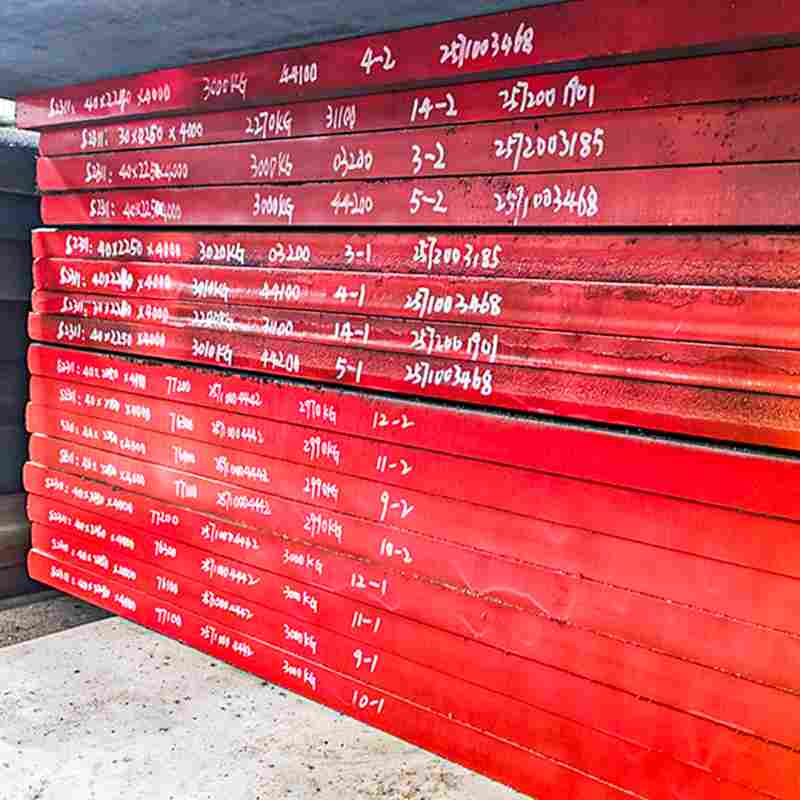
P20 and NAK80 are both plastic mold steel grades, but they differ in hardness, polishability, and application. P20 (1.2311) is supplied at 28–32 HRC. NAK80 is a precipitation-hardened steel supplied at 37–43 HRC. NSPM, a wholesale manufacturer and supplier, stocks both grades with custom cutting services.
Key Takeaways
- P20 is supplied at 28–32 HRC; NAK80 is supplied at 37–43 HRC.
- NAK80 offers superior polishability, reaching mirror surface finish (Ra ≤ 0.01 µm).
- P20 is more cost-effective and easier to machine for general molds.
- NAK80 is preferred for transparent parts, optical components, and high-gloss surfaces.
- P20 equivalent: 1.2311. NAK80 equivalent: P21 (AISI).
- Both are pre-hardened and require no additional heat treatment before machining.
Chemical Composition and Hardness
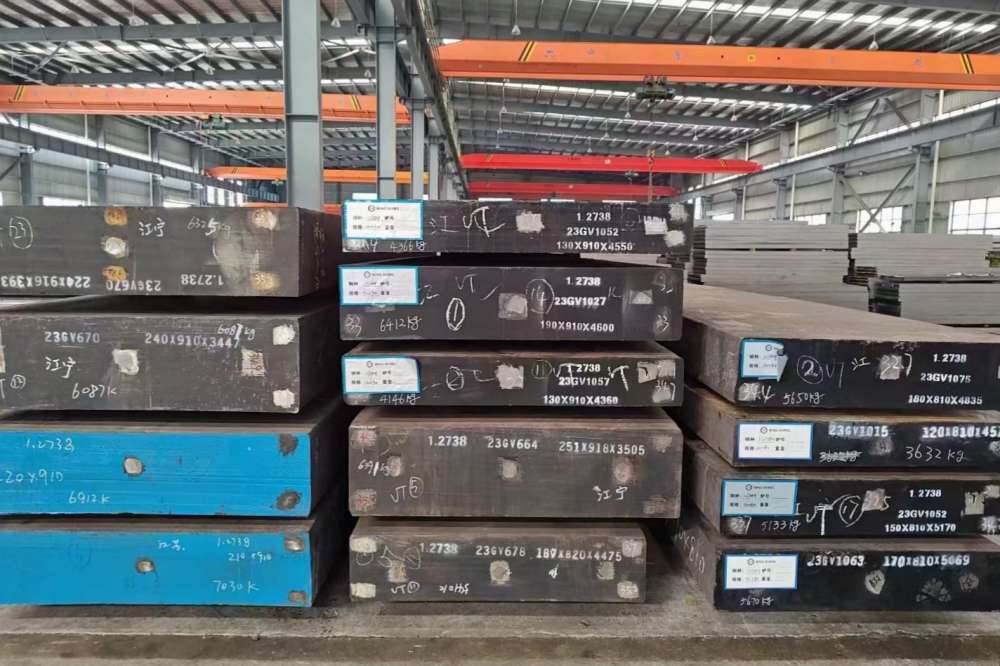
P20 (1.2311) Composition and Hardness
P20 contains approximately 0.37% carbon, 2.0% chromium, and 0.2% molybdenum. It is supplied in the quenched and tempered condition at 28–32 HRC (280–320 HB). This hardness provides a balance between machinability and wear resistance. The steel is through-hardened for uniform properties across the section. P20 is typically used for mold bases, cavities, and cores where moderate wear resistance is sufficient.
NAK80 Composition and Hardness
NAK80 is a precipitation-hardening steel containing approximately 0.15% carbon, 3.0% nickel, 1.0% copper, and 1.0% aluminum. It is supplied at 37–43 HRC (approximately 370–430 HB). The precipitation-hardening mechanism uses copper and aluminum to form fine precipitates during aging, providing high hardness without the distortion risk of quenching. This makes NAK80 suitable for direct machining into finished mold cavities.
Key Difference: Pre-Hardened vs. Precipitation Hardened
P20 is quenched and tempered, meaning it is heated above its critical temperature and rapidly cooled, then tempered to the desired hardness. NAK80 is precipitation-hardened, meaning it is solution-treated and aged to form fine precipitates. The practical difference is that NAK80 achieves higher hardness with better dimensional stability, while P20 offers lower cost and easier machining. For large mold bases and custom sizes, NSPM supplies open die steel forgings alongside P20 and NAK80.
Performance: Polishability, Machinability, and Wear Resistance
Polishability and Surface Finish
NAK80 significantly outperforms P20 in polishability. Its fine, uniform microstructure allows polishing to a mirror finish with Ra ≤ 0.01 µm, suitable for transparent lenses, optical parts, and high-gloss automotive interiors. P20 can achieve a good polish but typically reaches Ra ≤ 0.05–0.1 µm, which is adequate for most general plastic parts. For applications requiring the highest surface quality, NAK80 is the standard choice.
Machinability and Dimensional Stability
P20 machines at approximately 60–70% of free-cutting steel speed. NAK80 machines at a similar or slightly lower rate due to its higher hardness, but it requires no post-machining heat treatment. This saves time and avoids distortion. NAK80 also has excellent dimensional stability during machining and use, with minimal residual stress. P20 may require stress-relief annealing if extensive machining is performed.
Wear Resistance and Service Life
NAK80’s higher hardness (37–43 HRC) provides better wear resistance than P20 (28–32 HRC). In production runs with glass-filled or abrasive plastics, NAK80 lasts longer and maintains cavity dimensions. P20 is suitable for lower-volume runs or non-abrasive plastics. For high-volume production, NAK80’s longer service life often offsets its higher initial cost. For related tooling applications, NSPM also offers a full range of tool steel including hot work and cold work grades.
Applications: When to Choose P20 or NAK80
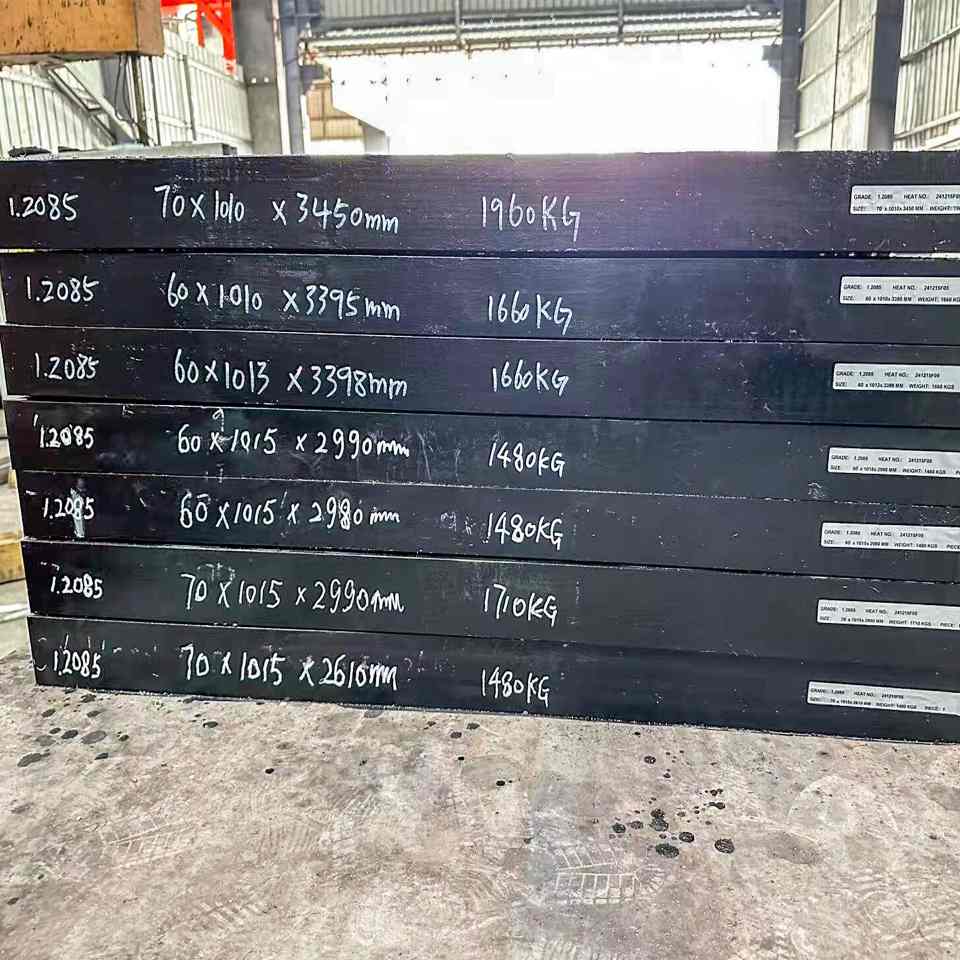
When to Choose P20 Steel
P20 is the cost-effective choice for general-purpose injection molds, mold bases, and prototype tooling. It is ideal for ABS, PP, PE, and other common plastics in low to medium production volumes. P20 is also easier to weld repair and modify, making it suitable for molds that may require engineering changes. NSPM supplies P20 in wholesale quantities with certified mill test certificates.
When to Choose NAK80 Steel
NAK80 is specified when high surface quality and wear resistance are required. Typical applications include transparent components, optical lenses, light guides, high-gloss appliance panels, and precision gears. It is also used for molds running glass-filled plastics or flame-retardant materials that accelerate wear. NAK80 is not recommended for large mold bases because of its higher cost and limited availability in very thick sections. For these applications, P20 or 1.2738 is more practical.
Can P20 and NAK80 Be Used Interchangeably?
Not directly. Substituting P20 for NAK80 will result in lower hardness and reduced polishability, potentially causing premature wear or surface defects. Substituting NAK80 for P20 increases cost and may reduce machinability. Selection should be based on the required surface finish, production volume, and plastic material. NSPM’s technical sales team can advise on grade selection for specific molding applications.
FAQs About P20 and NAK80 Steel
What is the main difference between P20 and NAK80?
P20 is a quenched and tempered steel at 28–32 HRC, offering good machinability and moderate wear resistance. NAK80 is a precipitation-hardened steel at 37–43 HRC, offering superior polishability and wear resistance. P20 is more cost-effective; NAK80 is preferred for high-gloss and high-wear applications.
Does NSPM supply P20 and NAK80 steel?
Yes. NSPM supplies P20 (1.2311) and NAK80 in wholesale quantities with certified mill test certificates. The company offers custom sizes, precision cutting, and plastic mold steel solutions for injection molding applications. For specific requirements, contact the NSPM technical sales team.
What should buyers confirm before ordering?
Confirm the grade, hardness range, and supply condition (pre-hardened or annealed). For NAK80, verify the precipitation-hardening treatment. For P20, confirm through-hardness uniformity. Ask for mill test certificates and ultrasonic inspection reports for critical molds. Verify that the supplier can provide custom sizes and certified material. NSPM, a wholesale plastic mold steel supplier and manufacturer, provides these documents and custom cutting services to meet specific project requirements.