

1.2436 is a high-carbon, high-chromium tool steel that belongs to the ledeburitic class. It is known for its excellent wear resistance, good toughness, and dimensional stability. After heat treatment, it reaches a hardness of 58–62 HRC. These properties make it suitable for cutting tools, dies, and cold work applications. This article covers its chemical composition, mechanical and physical properties, heat treatment, applications, and equivalent grades.
Key Takeaways
- 1.2436 tool steel offers high wear resistance and hardness up to 62 HRC, extending tool life.
- Triple tempering at 520°C after hardening ensures dimensional stability and toughness.
- It is equivalent to AISI D6, JIS SKD2, and DIN X210CrW12.
- Proper heat treatment and surface coatings further enhance its performance.
What Is 1.2436 Tool Steel and Its Chemical Composition?
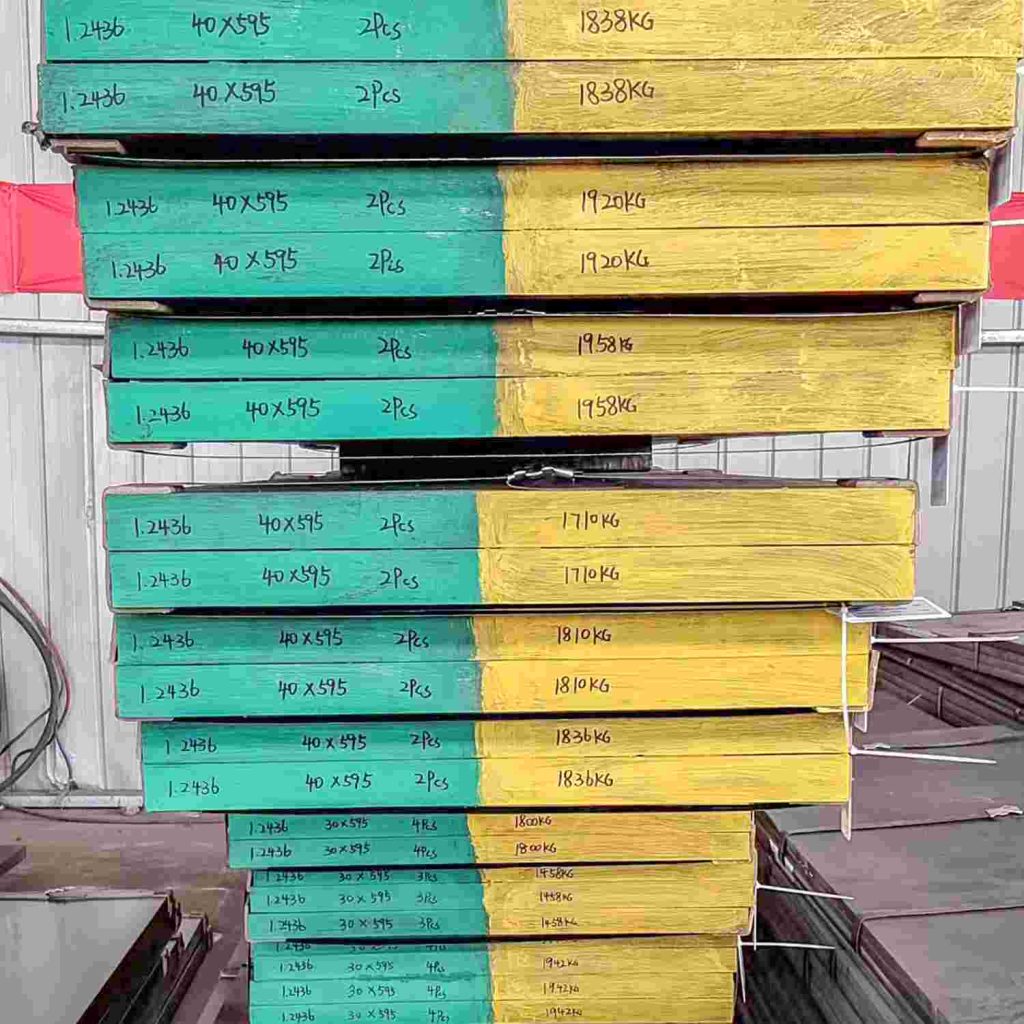
Definition and Material Classification
1.2436 is a cold work tool steel with high carbon and chromium content. It is classified as a ledeburitic steel, meaning its microstructure contains hard carbides that provide outstanding wear protection. After heat treatment, it achieves a hardness range of 58–62 HRC while maintaining good toughness and machinability. These traits make it ideal for demanding cold work applications.
Key Alloying Elements: Carbon, Chromium, Tungsten
The chemical composition of 1.2436 follows DIN EN ISO 4957 standards. The table below shows the typical ranges.
| Element | Composition (%) |
|---|---|
| C | 2.00–2.30 |
| Si | 0.60 max |
| Mn | 0.60 max |
| P | 0.030 max |
| S | 0.030 max |
| Cr | 11.00–13.50 |
| W | 0.60–0.90 |
Carbon forms hard carbides, chromium provides wear resistance and hardenability, and tungsten improves tempering resistance. The combination of these elements gives 1.2436 high wear resistance and dimensional stability, making it suitable for precision tools that must hold tight tolerances.
Mechanical and Physical Properties of 1.2436 Material
Hardness and Wear Resistance
After proper heat treatment, 1.2436 reaches a hardness of 58–62 HRC. The high carbon and chromium content creates hard carbides that resist wear during demanding operations. Tempering temperature affects the final hardness, as shown below.
| Tempering Temperature | Hardness (HRC) |
|---|---|
| 150–250 °C | 58–62 |
| 300–500 °C | 50–58 |
| ≥500 °C | 45–50 |
Low-temperature tempering preserves maximum hardness for cutting tools. Higher temperatures sacrifice some hardness to improve toughness. This balance makes 1.2436 suitable for cold work tasks where both wear resistance and toughness are needed.
Compressive Strength and Dimensional Stability
1.2436 has strong compressive strength, allowing it to withstand heavy forming loads without bending. Its ledeburitic structure contributes to excellent dimensional stability during heat treatment and use. This stability enables manufacturers to produce precise parts with confidence. Common applications include cutting tools, cold work dies, precision tools, and shock-resisting tools.
Density, Thermal Conductivity, and Modulus of Elasticity
The physical properties of 1.2436 are typical for high-chromium tool steels:
- Density: approximately 7.7 g/cm³
- Thermal conductivity: about 20 W/m·K
- Modulus of elasticity: around 210 GPa
These values help engineers predict how the material will behave under thermal and mechanical loads.
Heat Treatment of 1.2436 Tool Steel
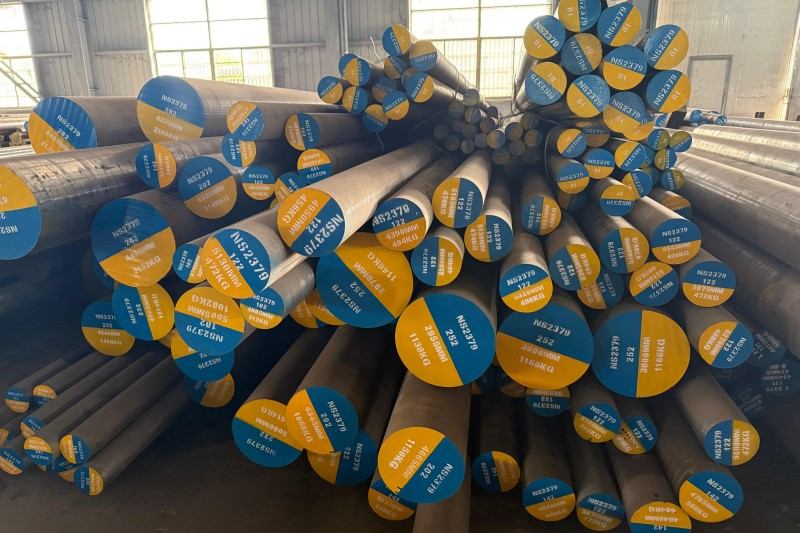
Soft Annealing and Stress Relief Annealing
Soft annealing prepares 1.2436 for machining by reducing hardness and relieving internal stresses. A typical cycle:
- Heat to 800–840°C.
- Hold for 2–5 hours.
- Cool slowly in the furnace to 500°C.
- Continue cooling in air.
This produces an annealed hardness of 255 HB or less, making the steel easier to cut and shape. Stress relief annealing after rough machining reduces the risk of cracking during subsequent hardening.
Hardening and Tempering
Hardening involves austenitizing followed by quenching. 1.2436 responds well to oil or air quenching. Tempering reduces brittleness and improves toughness. Triple tempering at 520°C is the industry standard for D6-type steels. This process ensures dimensional stability and consistent hardness. Tools made from 1.2436 retain their shape during use, which is critical for precision applications.
Applications and Equivalent Grades of 1.2436 Steel
Cutting, Shearing, and Drawing Tools
1.2436 is widely used for cold work tooling that experiences high wear. Typical applications include:
- Cutting tools for shearing and stamping
- Blanking dies
- Drawing dies and mandrels
- Cold shear blades and disc knives
Surface coatings such as TiN, TiCN, CrN, and AlTiN can further improve performance by reducing friction and increasing surface hardness. The effectiveness of a coating depends on the base material quality, making proper heat treatment and cleaning essential.
International Equivalent Grades: D6, SKD2, X210CrW12
1.2436 has equivalent grades under different standards:
| Element (%) | AISI D6 | DIN 1.2436 |
|---|---|---|
| C | 2.00–2.20 | 2.00–2.30 |
| Mn | 0.20–0.40 | 0.30–0.60 |
| P | ≤0.03 | ≤0.03 |
| S | ≤0.03 | ≤0.03 |
| Si | 0.20–0.40 | 0.10–0.40 |
| Cr | 11.50–12.50 | 11.00–13.00 |
| W | 0.60–0.90 | 0.60–0.80 |
These grades share similar properties and applications. AISI D6, JIS SKD2, and DIN X210CrW12 are interchangeable in most cold work applications. Engineers trust 1.2436 for dies requiring high compressive strength, shearing tools, and forming dies.
FAQs About 1.2436 Material
What is 1.2436 steel used for?
1.2436 is used for cold work tooling such as cutting tools, shearing blades, blanking dies, drawing dies, and precision tools. It is also used in applications requiring high wear resistance and dimensional stability.
What is the hardness of 1.2436 tool steel?
After hardening and tempering, 1.2436 reaches 58–62 HRC. In the annealed state, hardness is 255 HB or less. Tempering at higher temperatures reduces hardness but increases toughness.
What is 1.2436 equivalent to?
1.2436 is equivalent to AISI D6, JIS SKD2, and DIN X210CrW12. These grades have similar chemical compositions and performance characteristics.
Is 1.2436 a cold work tool steel?
Yes, 1.2436 is a high-carbon, high-chromium cold work tool steel. It is designed for cutting, forming, and shaping metal at or near room temperature.