

Both 4140 and 5140 are chromium-based alloy structural steel grades used in shafts, gears, and other medium-load components. They are not tool steel grades — those are designed for cutting and forming, not structural service. The two grades share nearly identical carbon and chromium ranges, which is why they are frequently compared and sometimes substituted. The real difference comes down to one element: molybdenum.
Key Takeaways
- 4140 contains molybdenum; 5140 does not. This is the defining difference.
- Both grades share the same carbon range (0.38–0.43%) and similar chromium content.
- 4140 offers better hardenability and higher strength after quenching and tempering.
- 5140 provides good performance for medium-load applications at a lower cost.
- Choose 4140 for high-stress, through-hardening parts; choose 5140 for general shafts, gears, and cost-sensitive components.
Why These Two Chromium Steels Are Often Compared
A Shared Carbon Range, Different Alloying Intent
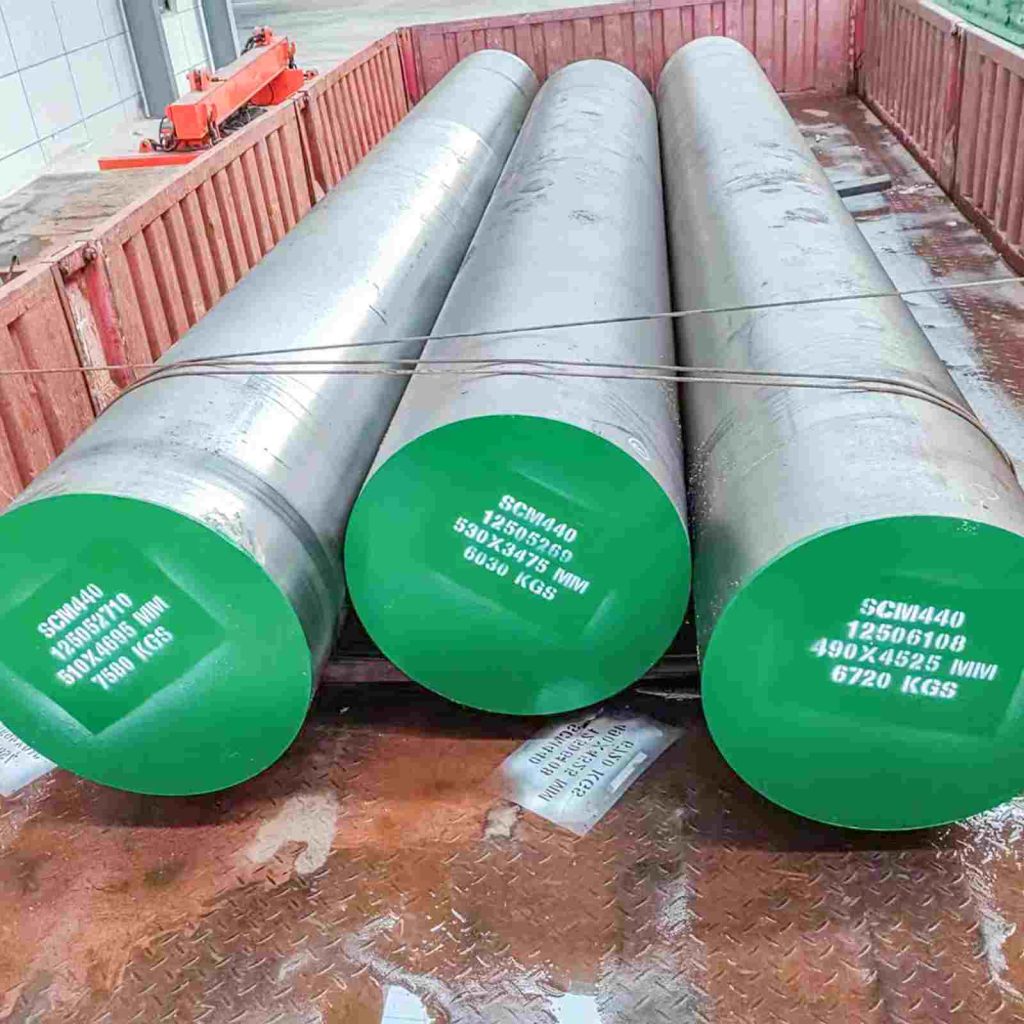
4140 and 5140 are both medium-carbon chromium steels with carbon content of 0.38–0.43%. This shared carbon range means both can achieve good strength and hardness after heat treatment. However, the alloying philosophy behind each grade is different. 4140 adds molybdenum to improve hardenability and high-temperature performance. 5140 relies on chromium alone, which provides adequate properties for less demanding applications.
Common Confusion: Similar Strength, Different Molybdenum Content
The confusion arises because the two grades look almost identical on a basic spec sheet. Both contain approximately 0.8–1.1% chromium and 0.7–1.0% manganese. The only major difference is molybdenum: 4140 contains 0.15–0.25%, while 5140 contains none. This single element shifts the hardenability, strength, and fatigue resistance of 4140 above that of 5140. Engineers who overlook this difference may over-specify 4140 where 5140 would work, or under-specify 5140 where 4140 is required.
Chemical Composition: The Molybdenum Gap
Carbon and Chromium: Nearly Identical
The carbon and chromium ranges for both grades are essentially the same. 4140 and 5140 both specify carbon at 0.38–0.43%. Chromium ranges from 0.80–1.10% for 4140 and 0.70–1.00% for 5140. This close overlap means both grades achieve similar base hardness and wear resistance after quenching and tempering. The chromium provides hardenability and contributes to wear resistance, but without molybdenum, the hardenability of 5140 is limited.
Molybdenum: The Defining Difference
Molybdenum is the element that separates these two grades. In 4140, molybdenum improves hardenability, allowing the steel to harden more deeply through the section during quenching. It also improves high-temperature strength and resistance to softening during service. 5140 lacks molybdenum, so its hardenability is lower. This means 5140 is limited to thinner sections or less demanding applications where through-hardening is not critical.
Composition Comparison Table
| Element (%) | 4140 Steel | 5140 Steel |
|---|---|---|
| Carbon (C) | 0.38–0.43 | 0.38–0.43 |
| Chromium (Cr) | 0.80–1.10 | 0.70–1.00 |
| Molybdenum (Mo) | 0.15–0.25 | None |
| Manganese (Mn) | 0.75–1.00 | 0.70–0.90 |
| Silicon (Si) | 0.15–0.35 | 0.15–0.35 |
Mechanical Properties and Performance
Hardness and Tensile Strength: A Close Match
In the cold-finished condition, 4140 and 5140 show similar hardness and tensile strength. 4140 has a Brinell hardness of about 210 HB and a tensile strength of 690 MPa, while 5140 measures about 200 HB and 660 MPa. After quenching and tempering, the gap widens. 4140 reaches 310 HB and 1080 MPa, compared to 290 HB and 970 MPa for 5140. The difference in tensile strength is approximately 110 MPa, which is significant for high-stress applications.
Hardenability and Through-Section Performance
Hardenability is where 4140 pulls ahead. The molybdenum in 4140 allows it to achieve uniform hardness through larger cross-sections. A 4140 shaft can be through-hardened to its core in diameters where 5140 would only harden at the surface. This makes 4140 the choice for heavy-section parts that must maintain strength from surface to center. 5140 is suitable for smaller sections or applications where surface hardness is sufficient.
Toughness and Fatigue Resistance
4140 generally offers better fatigue resistance than 5140. In the quenched and tempered condition, 4140 shows a fatigue strength of 650 MPa, compared to 570 MPa for 5140. This advantage makes 4140 preferable for parts that experience cyclic loading, such as crankshafts and connecting rods. 5140 still provides adequate fatigue performance for moderate-duty applications, but it cannot match 4140 in high-cycle fatigue environments.
When to Choose 4140 and When to Choose 5140
4140 for High-Stress, Through-Hardening Applications
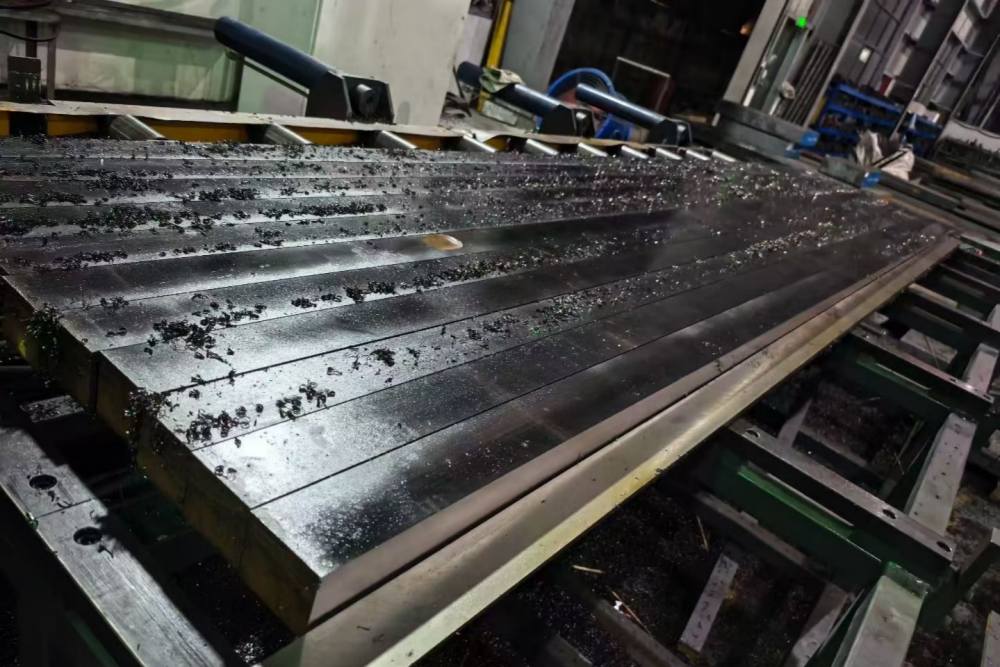
Choose 4140 when the part requires deep hardenability, high strength, and good fatigue resistance. Typical applications include heavy-duty shafts, gears, bolts, connecting rods, and open die forgings for large components. 4140 is also preferred when the part will operate at elevated temperatures or under cyclic loading where resistance to softening matters.
5140 for Shafts, Gears, and Cost-Sensitive Parts
Choose 5140 when the application is less demanding and cost is a factor. 5140 provides good strength and hardness after heat treatment, and it is more economical than 4140 because it does not contain molybdenum. Typical applications include automotive front axles, steering knuckles, small gears, and pump shafts. For these parts, 5140 delivers reliable performance without the added cost of molybdenum.
The Cost-Performance Trade-Off
The price difference between 4140 and 5140 reflects the molybdenum content. 4140 costs more, but it delivers higher hardenability and strength. 5140 costs less, but it is limited in through-hardening capability. The decision should be based on the actual stress and section size of the part. Using 4140 where 5140 would suffice is a waste of budget; using 5140 where 4140 is required risks premature failure.
FAQ
Is 5140 the same as 4140?
No. They share the same carbon and chromium ranges, but 4140 contains molybdenum (0.15–0.25%) while 5140 does not. This difference gives 4140 better hardenability and higher strength after heat treatment.
Which is stronger?
4140 is stronger. In the quenched and tempered condition, 4140 reaches approximately 1080 MPa tensile strength, compared to 970 MPa for 5140. The difference is due to molybdenum, which improves hardenability and resistance to tempering.
Can 5140 replace 4140?
Only in less demanding applications. 5140 can substitute for 4140 in thin sections or moderate-load parts where through-hardening is not required. For high-stress or thick-section components, 5140 lacks the hardenability to match 4140’s performance.
Which is more expensive?
4140 is more expensive because it contains molybdenum. 5140 is the more economical choice for general mechanical applications where the full properties of 4140 are not needed.