
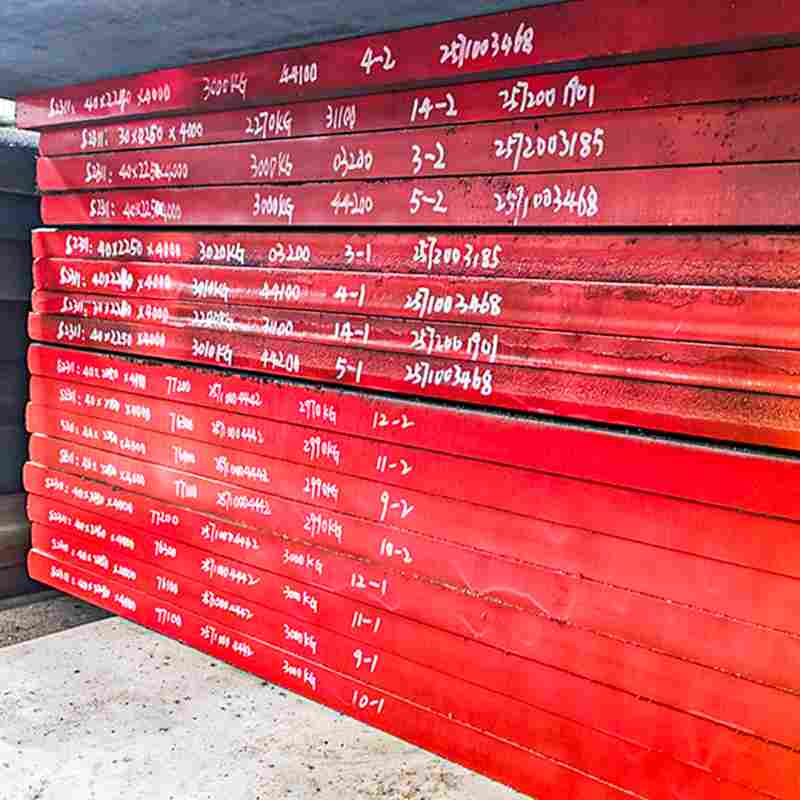
D2 and D6 are both cold-work tool steels, but they differ in composition, wear resistance, toughness, and machining behavior. These two tool steels differ in composition, wear resistance, toughness, and machining behavior. This guide compares the two grades across chemical composition, performance, applications, and selection criteria to help you choose the right steel for your tooling needs.
Key Differences Between D2 and D6 Steel
Chemical Composition
The chemical makeup of each grade explains most of their performance differences.
| Element | D2 Steel | D6 Steel |
|---|---|---|
| Carbon | 1.40–1.60% | 2.00–2.20% |
| Chromium | 11.00–13.00% | 11.50–12.50% |
| Molybdenum | 0.70–1.20% | 0.35–0.55% |
| Vanadium | 0.15–0.30% | — |
| Tungsten | — | 0.60–0.90% |
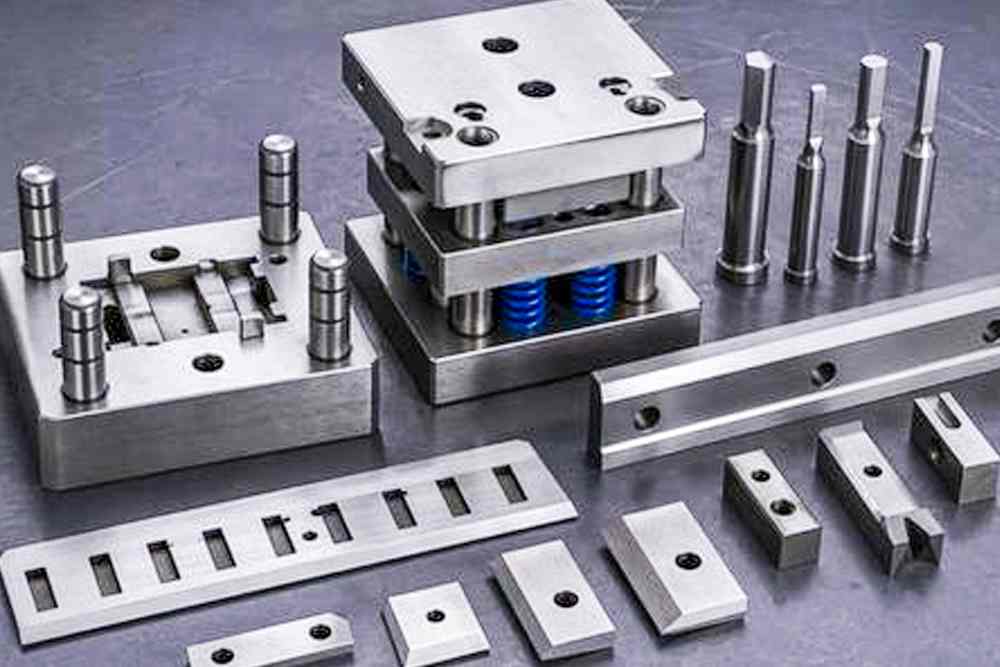
D2 contains moderate carbon and chromium, along with molybdenum and vanadium. This combination forms fine chromium carbides and secondary Mo/V-rich carbides, giving D2 a balanced structure.
D6 has significantly higher carbon and adds tungsten, while keeping chromium near D2 levels. The extra carbon and tungsten create a larger volume of hard, dense carbides. This difference directly affects hardness, wear resistance, and toughness after heat treatment.
Wear Resistance
Wear resistance is the clearest distinction between these two grades.
D6 achieves higher abrasion resistance because of its greater carbide volume. The chromium- and tungsten-rich carbides resist abrasive particles effectively, making D6 suitable for severe abrasive conditions. However, those same carbides can act as crack initiation sites, reducing shock resistance.
D2 forms fine, evenly distributed chromium carbides. This balanced carbide structure provides excellent wear resistance while maintaining better toughness and crack resistance than D6. In direct comparison, D6 wins in maximum abrasion resistance, while D2 offers balanced wear performance with superior fracture resistance for intermittent loading.
Heat treatment also influences wear life. Both grades air-harden, but D2’s even cooling reduces thermal gradients and lowers cracking and distortion risk. Many D2 blanking dies can be finish-ground before hardening. D6 also hardens in still air, and its tungsten content stabilizes carbides, keeping dimensional change typically below 0.05% during hardening.
Toughness and Chipping Resistance
Toughness determines how well a tool resists chipping and cracking under impact.
D2 provides moderate toughness. Its finer carbide structure and lower carbon content help it absorb shock better than D6. This makes D2 suitable for applications with moderate impact loads, such as blanking and forming dies that experience intermittent strikes.
D6 has lower toughness due to its higher carbon and tungsten content. The larger carbide volume creates more potential crack paths, so D6 is more prone to chipping and cracking under impact. For this reason, D6 is not recommended for tools that encounter sudden shocks or high-impact loads. It performs best in steady, low-impact operations where abrasion is the primary wear mechanism.
Machinability and Grinding
Machinability and grinding ease differ between the two grades.
D2 is generally easier to machine and grind. Its lower carbide volume and finer carbide distribution allow smoother cutting and grinding. This reduces tool wear during machining and shortens production time. D2 also responds well to surface grinding and can achieve fine finishes with less effort.
D6 is more difficult to machine and grind. The higher carbide content makes the steel harder and more abrasive to cutting tools. Grinding D6 requires more time and generates more heat, increasing the risk of surface damage if not controlled properly. For complex tooling, D2 is often the more practical choice when machining efficiency matters.
Applications: When to Choose D2 or D6 Steel
D2 Steel Applications
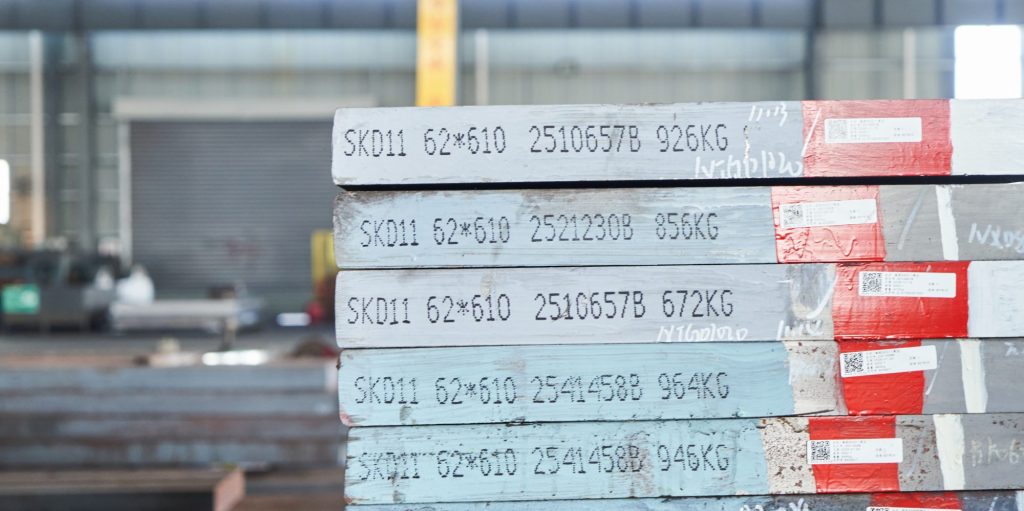
D2 works best in cold-work tooling where abrasive wear is the main concern and impact loads are moderate. Its balanced carbide structure makes it suitable for:
- Blanking dies
- Forming dies
- Punches
- Shear blades
- Plastic cutting blades
- Paper cutting blades
- Packaging and trimming tools
- Leather cutting blades
- Food processing blades
- Woodworking tools
- Metalworking tools
- Precision gauges
- Wear plates
- Heavy-duty bushings
- High-pressure fixture blocks
D2 hardens deeply, maintaining even hardness through the tool thickness and reducing the chance of early failure. It withstands repeated moderate impacts without cracking.
D6 Steel Applications
D6 is designed for cold-work dies that face severe abrasion with little shock. Its higher carbon and tungsten content maximizes abrasion resistance. Typical applications include:
- High-volume stamping dies
- Drawing dies
- Cold forming dies
- Tools running abrasive stock under steady, low-impact pressure
D6 excels where abrasive wear causes failure, but the same carbides that provide wear resistance also reduce impact toughness. It is not suitable for tools that experience sudden shocks or high-impact loads.
Can D6 Replace D2?
In some cases, D6 can replace D2, but not universally. If the application involves severe abrasive wear and low impact, D6 may offer longer tool life. However, if the tool experiences moderate impact or requires good toughness, D2 remains the better choice. D6’s lower toughness means it may chip or crack under conditions that D2 can handle. Before substituting, evaluate the specific wear mechanism, impact loads, and tool geometry. In many general cold-work applications, D2 provides a more balanced performance.
FAQs About D2 and D6 Steel
Is D6 steel better than D2 steel?
Neither is universally better. D6 offers higher wear resistance for severe abrasive conditions, while D2 provides a better balance of wear resistance and toughness. The right choice depends on the application.
Is D6 tougher than D2?
No. D6 has lower toughness than D2 because its higher carbon and tungsten content creates more carbides, which act as crack initiation sites. D2 is the better choice when impact resistance is needed.
Which steel is easier to machine?
D2 is easier to machine and grind. Its lower carbide volume and finer carbide distribution allow smoother cutting and grinding, reducing tool wear and production time. D6 is more abrasive to cutting tools and requires more careful grinding.
What is D2 tool steel used for?
D2 is used for cold-work tooling such as blanking dies, forming dies, punches, shear blades, and cutting tools. It suits applications requiring a balance of wear resistance and toughness.
What is D6 tool steel used for?
D6 is used for cold-work dies that face severe abrasion with minimal impact, such as high-volume stamping dies, drawing dies, and cold forming dies. It excels in abrasive wear conditions but is not suitable for high-impact applications.