


D6 steel is a high-carbon, high-chromium cold work tool steel known for its exceptional wear resistance and ability to hold a sharp edge. As a cold work tool steel, it reaches a hardness of 62–64 HRC after quenching, with a typical working hardness of 60–62 HRC after tempering. These values make it suitable for demanding applications where maximum wear resistance is required.
Key Takeaways
- Annealed: ≤255 HB (approximately 22–25 HRC)
- As-quenched: 62–64 HRC
- Tempered (working hardness): 60–62 HRC
- Maximum achievable: 63–64 HRC at low tempering temperatures
- D6 vs. D2: D6 achieves higher hardness due to its higher carbon and tungsten content
D6 Steel Hardness Range by Condition
Annealed: ≤255 HB (Approx. 22–25 HRC)
In the annealed (soft) condition, D6 steel is supplied at a maximum hardness of 255 HB. Some sources specify approximately 225 HB for the annealed state. This soft condition allows for machining, drilling, and milling before the final hardening process. The annealed structure consists of carbides in a ferrite matrix, which provides the machinability needed to shape the tool before heat treatment.
As-Quenched: 62–64 HRC
After austenitizing at 940–980°C and quenching in oil, air, or a warm bath at 500–550°C, D6 steel reaches its maximum hardness of approximately 64 HRC. The as-quenched structure is martensitic with finely dispersed carbides. At this stage, the steel is extremely hard but also brittle and not suitable for service without tempering. The high carbon content of 2.00–2.25% is the primary driver of this as-quenched hardness, as it forms a large volume of hard carbides.
Tempered (Typical Working Hardness): 60–62 HRC
Tempering reduces brittleness while retaining most of the hardness. For D6 steel, a typical tempering treatment at 200°C produces a working hardness of 60–62 HRC. A study on AISI D6 cold work tool steel reported a final hardness of 62 HRC after hardening at 860–880°C, oil quenching, and triple tempering for 3-hour intervals. This combination of hardness and toughness is what makes D6 suitable for cutting, shearing, and blanking tools.
Maximum Achievable: 63–64 HRC at Low Tempering Temperatures
At low tempering temperatures (100–150°C), D6 steel can retain a hardness of 63–64 HRC. The table below shows the relationship between tempering temperature and hardness:
| Tempering Temperature | Hardness (HRC) |
|---|---|
| 100°C | 63 |
| 200°C | 62 |
| 300°C | 60 |
| 400°C | 58 |
| 500°C | 56 |
| 600°C | 48 |
This data from West Yorkshire Steel illustrates the trade-off between hardness and toughness. Lower tempering temperatures preserve maximum hardness for cutting tools, while higher temperatures sacrifice some hardness to gain toughness for forming and impact applications.
What Determines D6 Hardness and How Heat Treatment Affects It
Chemical Composition: Carbon, Chromium, and Tungsten
D6 steel derives its hardness from a carefully balanced chemistry. The carbon content of 2.00–2.25% forms the hard carbide network that resists wear. Chromium at 11.5–12.5% provides hardenability and contributes to carbide formation. Tungsten at 0.60–0.90% enhances tempering resistance and hot hardness, allowing the steel to maintain its properties at elevated temperatures. This combination produces a ledeburitic microstructure with a high volume of hard carbides, which is the foundation of D6’s wear resistance and hardness.
Hardening and Quenching: Austenitize at 940–980°C
The hardening process begins with austenitizing at 940–980°C. The steel is held at this temperature long enough for the carbides to dissolve and the structure to transform to austenite. Quenching follows, using oil, air, or a warm bath at 500–550°C. The quench must be fast enough to avoid the pearlite and bainite transformation nose, ensuring a fully martensitic structure. After quenching, the hardness reaches 64 HRC. For complex shapes or large sections, preheating at 750–800°C is recommended to reduce thermal gradients and minimize distortion.
Tempering Temperature vs. Hardness
Tempering is the critical step that determines the final working hardness. The table above shows the progression. For cutting and shearing tools where maximum wear resistance is needed, a low tempering temperature of 150–200°C is appropriate. For forming dies and punches that experience impact, a higher tempering temperature of 300–500°C provides a better balance of hardness and toughness. Double or triple tempering is recommended to ensure complete transformation and dimensional stability.
Cryogenic Treatment: +1–2 HRC
Cryogenic treatment, which involves cooling the steel to -80°C or lower after quenching and before tempering, can increase hardness by 1–2 HRC. This process converts retained austenite to martensite, resulting in a more complete transformation and improved wear resistance. It also enhances dimensional stability, which is critical for precision tooling.
How D6 Compares and Which Hardness to Choose
D6 vs. D2 vs. D3 vs. A2
| Steel Grade | Typical Working Hardness (HRC) | Key Difference |
|---|---|---|
| D6 | 60–62 | High carbon + tungsten, maximum wear resistance |
| D2 | 58–62 | Lower carbon, better toughness |
| D3 | 62–64 | Similar to D6, different tungsten content |
| A2 | 58–62 | Air-hardening, better dimensional stability |
D6 and D3 are both high-carbon, high-chromium grades, but D6 contains tungsten, which improves tempering resistance. D2 offers a better balance of wear resistance and toughness, making it suitable for applications with moderate impact. A2 is air-hardening and provides excellent dimensional stability, making it a good choice for complex tooling.
60–62 HRC for Cutting and Shearing Tools
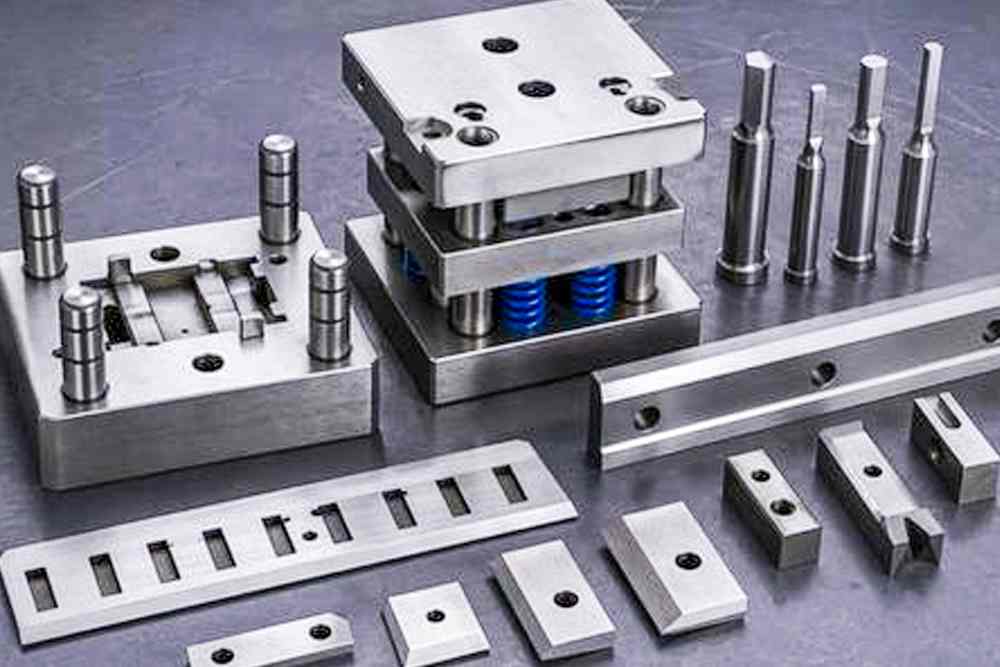
For cutting, shearing, and blanking tools, the optimal hardness for D6 is 60–62 HRC. At this hardness, the steel maintains a sharp edge and resists abrasive wear from the material being cut. Applications include shear blades, paper cutting blades, and industry knives and blades for plastic and metal.
58–60 HRC for Forming Dies and Punches
For forming dies and punches that experience moderate impact, a slightly lower hardness of 58–60 HRC provides a better balance of wear resistance and toughness. This reduces the risk of chipping while still offering good wear resistance.
Below 58 HRC for High-Impact Applications
For heavy-duty applications with significant impact loading, such as die casting dies and certain forging tools, a hardness below 58 HRC may be appropriate. At this level, the steel sacrifices some wear resistance for improved toughness and resistance to cracking under shock.
FAQs About D6 Steel Hardness
What is the maximum hardness of D6 steel?
The maximum achievable hardness of D6 steel is 63–64 HRC, reached immediately after quenching from 940–980°C. After tempering, the practical working hardness is 60–62 HRC.
What hardness is D6 in the annealed condition?
In the annealed condition, D6 steel has a maximum hardness of 255 HB (Brinell), which is approximately 22–25 HRC. This soft state allows for machining before final hardening.
How does tempering affect D6 hardness?
Tempering reduces hardness from the as-quenched 64 HRC. At 100°C, hardness remains around 63 HRC. At 300°C, it drops to 60 HRC. At 600°C, it falls to 48 HRC. Lower tempering temperatures preserve hardness; higher temperatures increase toughness.
What hardness should I specify for my application?
For cutting and shearing tools, specify 60–62 HRC. For forming dies and punches with moderate impact, specify 58–60 HRC. For high-impact applications, specify below 58 HRC. Always confirm the delivery condition and heat treatment requirements with your supplier.