

After quenching, both the tensile strength and yield strength of 4140 steel are higher than those of 4130 steel; the specific differences depend on the heat treatment process and the intended application. Both 4130 and 4140 belong to the chromium-molybdenum steel family. This article compares their tensile strength, yield strength, and hardness, and examines how heat treatment affects these properties.
Key Takeaways
- When quenched and tempered to the same hardness range, 4140 typically exhibits higher tensile strength than 4130.
- 4130 is easier to weld and offers greater ductility (20% elongation vs. 15% for 4140).
- Choose 4140 for high strength and wear resistance; choose 4130 for welded structures and toughness.
- In thick sections, 4130 may have insufficient core hardness due to lower hardenability.
- 4140 costs approximately 10–15% more than 4130 due to higher alloy content.
4130 vs 4140 Steel: Chemical Composition and Strength Basis
The chemical compositions of these two chromium-molybdenum steels account for most of the differences in their properties. Carbon content is the primary factor driving differences in strength and hardenability.
4130 (25CrMo4) Chemical Composition
Carbon content is approximately 0.30% (0.28%–0.33% per ASTM A29), providing good weldability and moderate strength. Chromium content is 0.80%–1.10%, molybdenum 0.15%–0.25%, manganese 0.40%–0.60%, and silicon 0.15%–0.35%. The relatively low carbon content results in a lower carbon equivalent (CE), which reduces heat-affected zone cracking sensitivity during welding. This makes 4130 suitable for TIG and oxy-acetylene welding with appropriate preheating (typically 150–200°C for thin sections).
4140 (42CrMo4) Chemical Composition
| Element | Content (%) |
|---|---|
| Carbon, C | 0.380 – 0.430 |
| Chromium, Cr | 0.80 – 1.10 |
| Molybdenum, Mo | 0.15 – 0.25 |
| Manganese, Mn | 0.75 – 1.00 |
| Silicon, Si | 0.15 – 0.35 |
The higher carbon content of 4140 enhances hardenability and allows for a deeper hardened layer. This results in superior strength, hardness, and hardenability. In contrast, 4130 offers better toughness, ductility, and weldability.
Carbon Content: The Deciding Factor for Strength
Carbon content is the single most important factor distinguishing these two grades. At 0.30%, 4130 balances strength with fabrication ease. At 0.40%, 4140 achieves higher hardness and strength after heat treatment but requires more careful welding procedures. The tensile strength data illustrates the difference: 4130 has a tensile strength of 97,000 psi, whereas 4140 can reach 110,000 psi (normalized condition, per ASM Metals Handbook). In the annealed condition, 4140 reaches 740 MPa (110,000 psi). The gap is relatively narrow in normalized and annealed states; the difference becomes pronounced after quenching and tempering.
Higher carbon also increases the carbon equivalent, which raises the risk of hydrogen-induced cracking in the heat-affected zone. This is why 4140 requires preheating to 150–370°C depending on section thickness, while 4130 requires less stringent preheating.
4130 vs 4140 Mechanical Properties: Which Is Stronger?
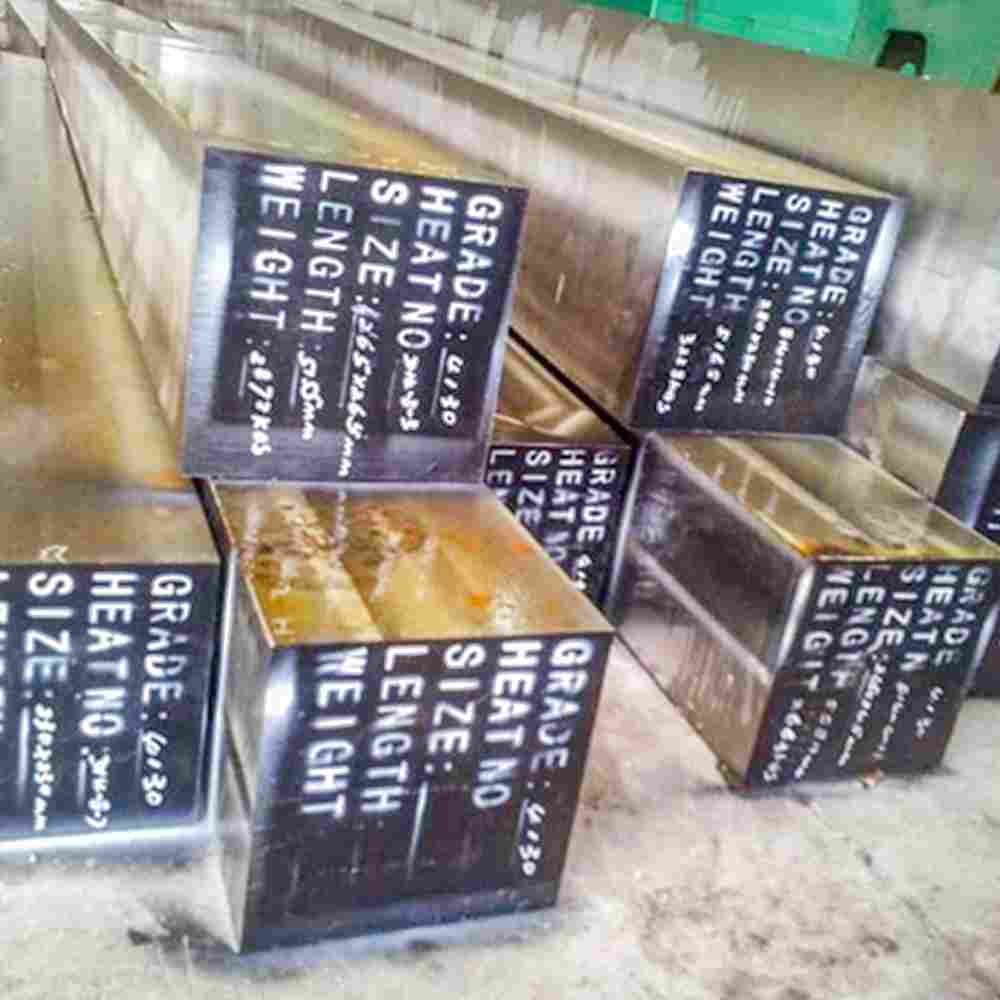
Tensile Strength and Yield Strength Comparison
| Condition | 4130 | 4140 |
|---|---|---|
| Normalized yield strength | 63,000 psi (435 MPa) | 95,000 psi (655 MPa) |
| Q&T yield strength | 850–1100 MPa | 930–1100+ MPa |
| Through-hardened tensile | 140–150 ksi | 185–210 ksi |
| Through-hardened hardness | ~30 HRC | 40–45 HRC |
| Elongation | 20% | 15% |
Data from ASTM A370 testing and ASM Metals Handbook, normalized and quenched-and-tempered conditions.
4140 responds exceptionally well to quenching and tempering; with appropriate heat treatment, yield strength can exceed 1100 MPa. 4130 also responds well, with oil quenching producing ultimate tensile strength of 850 to over 1100 MPa. However, at the same hardness level, 4140 maintains higher strength. Ductility is inversely proportional to strength: 4130 has 20% elongation, while 4140 has 15%.
Hardness and Hardenability
4140 possesses higher hardness than 4130. After quenching and tempering, 4130 hardness ranges from 250 to 320 HB, reaching 320 to 400 HB in high-strength conditions. Pre-hardened 4140 typically falls within 280–360 HB. Following through-hardening (oil quenching), 4140 hardness is approximately 50–55 HRC; maximum hardness is generally considered 55 HRC. After strengthening treatment, 4130 hardness ranges from 30 to 45 HRC.
Hardenability differs significantly. In a Jominy end-quench test, 4140 maintains higher hardness at greater distances from the quenched end. This means thick sections of 4140 achieve more uniform core hardness, while 4130 may have soft cores in sections exceeding 50 mm.
Fatigue Strength and Toughness
4140 offers excellent fatigue and torsional strength, making it ideal for rotating components under cyclic loading. 4130 provides superior toughness and ductility, with 20% elongation meaning it resists fracture during bending. For applications involving shock loading or bending stresses, 4130 performs better. For applications involving continuous cyclic stress, 4140 fatigue resistance provides longer service life. Charpy V-notch impact testing at room temperature typically shows 4130 with 54 J and 4140 with 27 J at equivalent hardness.
How Heat Treatment Affects Strength
Both steels respond well to heat treatment, but 4140 achieves higher absolute strength levels. Typical austenitizing temperature is 845–870°C for both grades. 4140 responds exceptionally well to quenching and tempering; with appropriate heat treatment, yield strength can exceed 1100 MPa. 4130 also responds well; following oil quenching, ultimate tensile strength ranges from 850 to over 1100 MPa. However, at the same hardness level, 4140 maintains higher strength due to its greater resistance to tempering softening — a result of higher chromium and molybdenum carbide formation. For 4140, tempering at 400–550°C should be followed by rapid cooling to avoid temper embrittlement.
4130 vs 4140 Applications: When to Use Which Steel
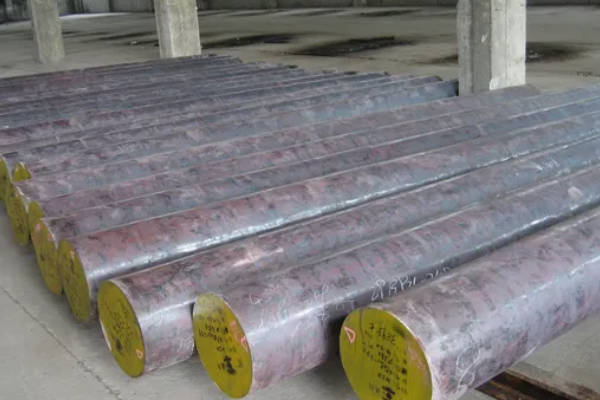
When to Choose 4130 Steel
4130 steel exhibits excellent toughness and ductility, with elongation up to 20%, meaning it resists fracture during bending. Engineers frequently select this chromium-molybdenum steel for lightweight structural components because it delivers exceptional strength in weight-constrained designs. The aerospace industry widely employs 4130 for aircraft airframe structures and engine mounts (per SAE AMS 5050/5051). In motorsports, teams commonly use 4130 to fabricate roll cages and chassis tubing. Normalizing (4130N) further enhances weldability and toughness. In thick sections (>50 mm), 4130 may have insufficient core hardness; consider 4140 for these applications.
When to Choose 4140 Steel
4140 steel offers high strength and wear resistance, making it suitable for demanding operating conditions. It possesses excellent fatigue and torsional strength, ideal for manufacturing automotive axles, heavy-duty crankshafts, and transmission gears. Manufacturers frequently select 4140 for high-stress rotating components. Through heat treatment, hardness can be significantly increased. Due to its carbon content, precise process control is required during welding: thin-walled parts require preheating to 150–200°C, heavy components to 315–370°C; post-weld stress relief at 540–650°C is necessary.
Can 4130 and 4140 Be Used Interchangeably?
In some cases, yes — but with careful consideration. 4140 can generally substitute for 4130 when higher strength and wear resistance are needed and the slight reduction in weldability is acceptable. However, 4130 cannot always substitute for 4140 in high-stress applications, because its lower hardenability may lead to insufficient core hardness in thick sections. For critical components, substitution should only be made after evaluating the specific mechanical and thermal loads and re-validating heat treatment parameters.
4130 vs 4140 for Welded Structures
4130 is the preferred choice for welded structures. Its lower carbon content reduces the risk of cracking in the heat-affected zone. Preheating requirements are less stringent (150–200°C for thin sections), and post-weld stress relief is simpler. 4140 requires preheating to 150–370°C depending on thickness and post-weld stress relief at 540–650°C. For thin-walled welded assemblies, 4130 is significantly easier to work with. Per AWS D1.1, 4130 is classified as readily weldable with proper procedures, while 4140 requires qualified welding procedures and preheat control.
FAQs About 4130 vs 4140 Steel
Which is better for shafts: 4130 or 4140?
For high-stress shafts requiring fatigue resistance and wear resistance, 4140 is generally better after quenching and tempering. For light-duty shafts or welded shaft assemblies, 4130 may be suitable. Consider the specific load, speed, and environment.
Is 4130 cheaper than 4140?
4130 is typically 10–15% less expensive than 4140 due to lower alloy content. However, total cost depends on heat treatment, machining, and application requirements. For high-volume production, the longer service life of 4140 may offset the higher initial cost.
Does NSPM supply 4130 and 4140 steel with quality assurance?
NSPM stocks both grades and provides full quality traceability. The company offers tool steel and alloy structural steel solutions with custom cutting and heat treatment services. Verify certification against ASTM A29 or EN 10204 3.1 requirements.
What should buyers confirm before ordering 4130 or 4140 steel?
Confirm the required strength level, heat treatment condition (normalized, annealed, Q&T, or pre-hardened), hardness range, and certification requirements. Verify chemical composition against ASTM A29 or EN 10083-3. Request mill test certificates and, for critical applications, third-party verification. Confirm delivery condition, surface quality, and dimensional tolerances.