

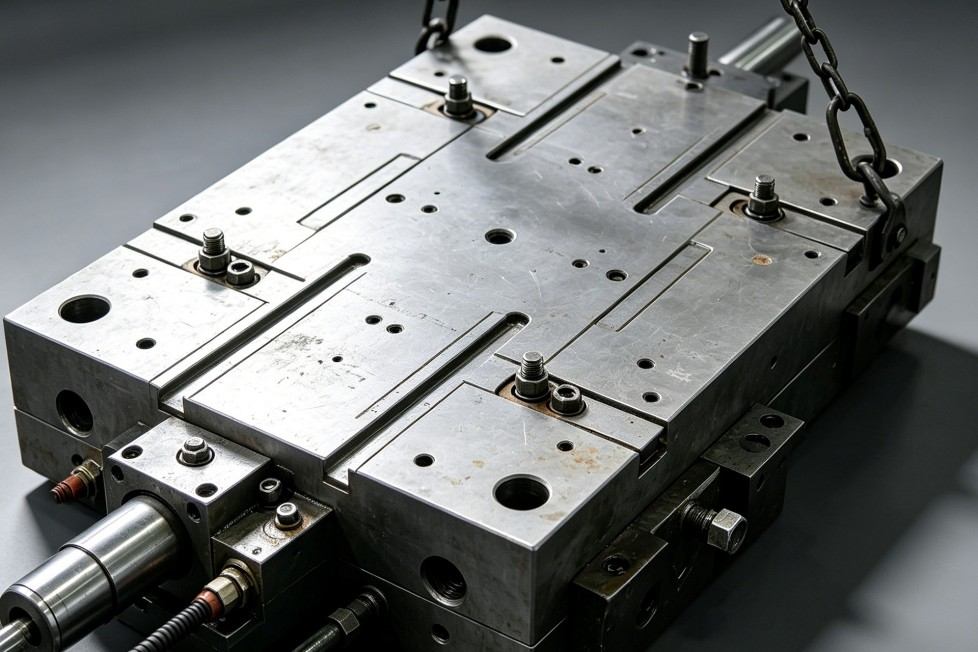
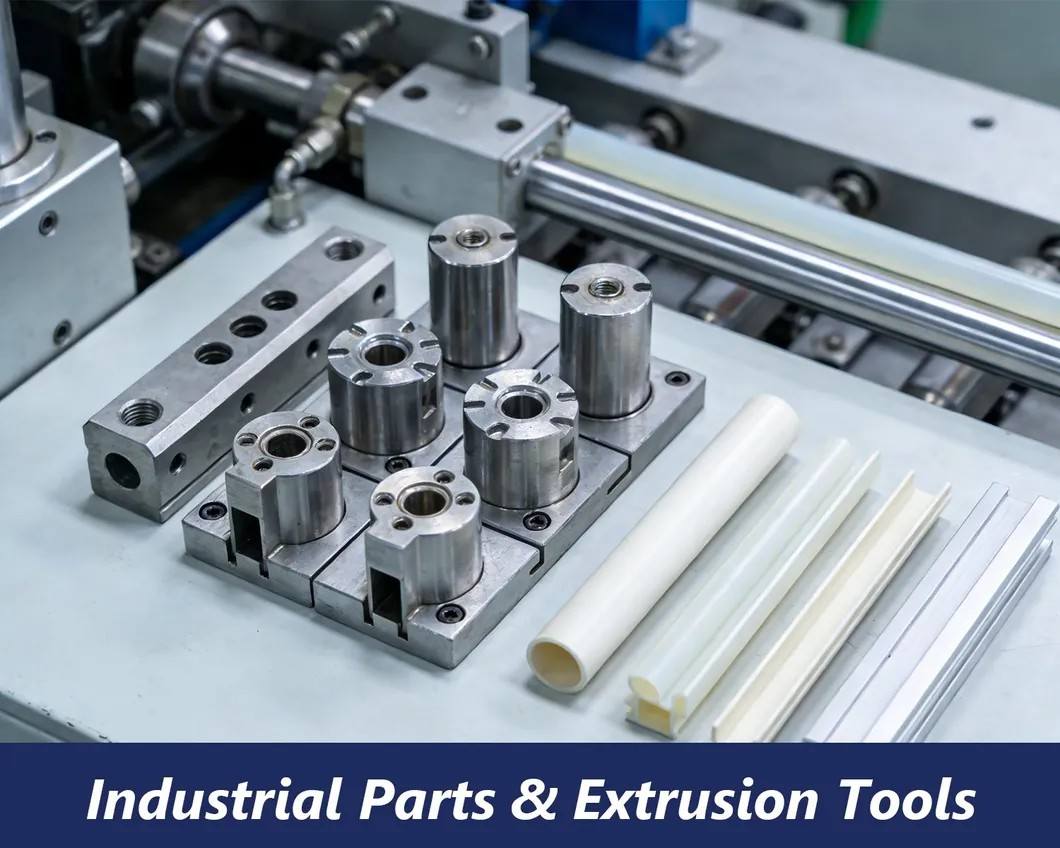
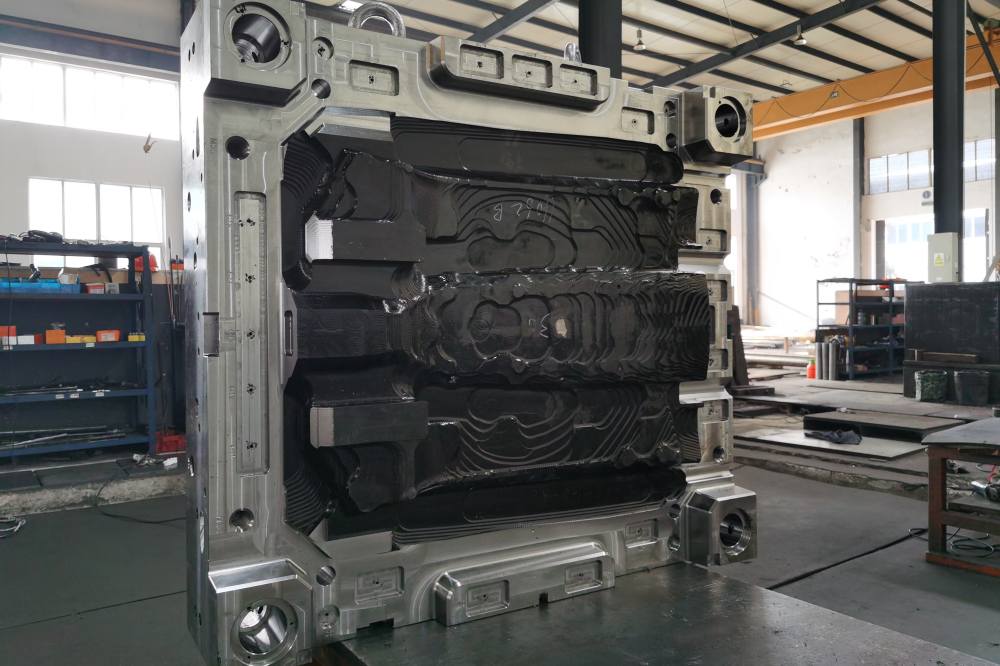
Mold steel is a category of tool steel specifically engineered for manufacturing molds used in plastic injection molding, die casting, and forming processes. It is classified as group P steel under the AISI system and is distinguished from other tool steels by its focus on polishability, machinability, corrosion resistance, and dimensional stability. Choosing the right mold steel directly affects tool life, part quality, and production cost.
Key Takeaways
- Mold steel is tool steel designed for molds and dies, classified as AISI P steels.
- The three main types are plastic mold steel, hot work mold steel, and cold work mold steel.
- Key properties include hardness, polishability, corrosion resistance, and toughness.
- P20 is the most common grade for general-purpose plastic molds at 28–34 HRC.
- H13 is the standard for die casting and abrasive resins at 48–52 HRC.
What Is Mold Steel and Why It Matters
Definition and Classification
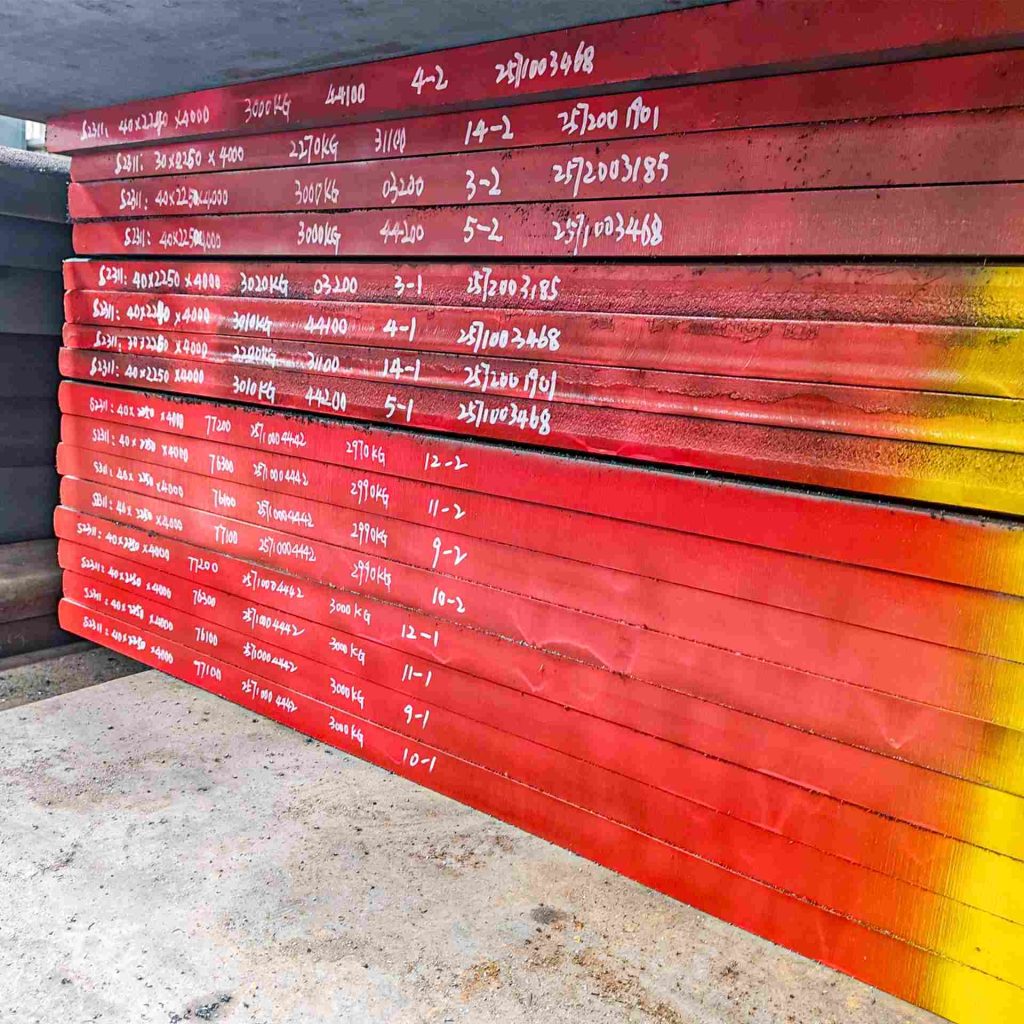
Mold steel is tool steel used for plastic molding and certain die-casting applications, designated as group P steels in the AISI classification system. These steels must balance four competing demands: wear resistance, hardness, corrosion resistance, and machinability/polishability. No single steel excels at all four, which is why multiple grades exist for different applications.
Mold Steel vs. Tool Steel
While mold steel is a subset of tool steel, it differs from cold work and hot work grades in its intended application. Cold work tool steels are optimized for cutting and forming at room temperature. Hot work tool steels resist softening at elevated temperatures. Mold steels, by contrast, are optimized for the surfaces that shape molten plastic — prioritizing polishability, corrosion resistance, and uniform hardness through the mold block.
Main Types and Key Properties of Mold Steel
Plastic Mold Steel
Plastic mold steel is the largest category. It includes pre-hardened grades like P20 and 718H, which are delivered ready to machine without additional heat treatment. These grades are used for injection molds, compression molds, and mold frames. P20 is the most commonly used mold steel, typically pre-hardened to 29–33 HRC.
Hot Work Mold Steel
Hot work mold steel is used for die casting dies, extrusion tooling, and forging dies. H13 is the most widely used grade in this category, offering high-temperature strength, thermal fatigue resistance, and good toughness. It is typically used at 44–50 HRC depending on the application.
Cold Work Mold Steel
Cold work mold steel is used for applications requiring high wear resistance at room temperature, such as blanking dies, forming rolls, and shear blades. Grades like D2 and A2 fall into this category. While not typically classified as mold steel, some cold work grades are used for specialized mold components.
Hardness, Polishability, and Corrosion Resistance
The table below summarizes the typical properties of common mold steel grades:
| Grade | Typical Hardness (HRC) | Best Production Volume | Key Property |
|---|---|---|---|
| P20 | 28–34 | Low to mid (< 500K shots) | General purpose, easy to machine |
| 718H | 30–36 | Mid to high (up to 1M shots) | Nickel-modified, uniform hardness |
| NAK80 | 38–43 | Mid volume | Mirror polish, pre-hardened |
| H13 | 44–52 | High volume (> 1M shots) | High-temperature strength |
| S136 | 48–52 | Mid to high, optical | Corrosion resistance, mirror polish |
P20 is pre-hardened at 28–32 HRC and works best for prototypes and general structural parts made from ABS, PP, or PS. It does not perform well with abrasive glass-fiber resins or applications requiring mirror-finish polishing.
718H is a nickel-modified P20 variant engineered for large cross-sections. The nickel addition improves through-hardening, making it the preferred choice when the mold block exceeds the depth where standard P20 achieves uniform hardness. Hardness range: 30–36 HRC.
NAK80 is pre-hardened to 38–42 HRC with uniform hardness from surface to center. It machines up to 20% faster than 30 HRC P20 and is highly weldable. NAK80 is suitable for plastic molds requiring wear resistance to withstand large-number production, as well as optical lenses and cosmetic surfaces.
S136 is a corrosion-resistant mold steel modified from AISI 420. It shows favorable mechanical properties and outstanding corrosion resistance, making it ideal for PVC, flame-retardant grades, and medical-grade resins. S136 quenched at 1050°C exhibits optimal hardness and corrosion resistance properties.
Toughness and Dimensional Stability
Mold steel must maintain dimensional accuracy through heat treatment and production. Pre-hardened grades like P20 and NAK80 eliminate the heat-treatment step, reducing distortion risk and lead time. For grades requiring hardening, vacuum heat treatment minimizes oxidation and dimensional change. Uniform hardness through the mold block ensures consistent part dimensions over millions of shots.
Common Grades and How to Choose
P20, 718, and NAK80 for Plastic Molds
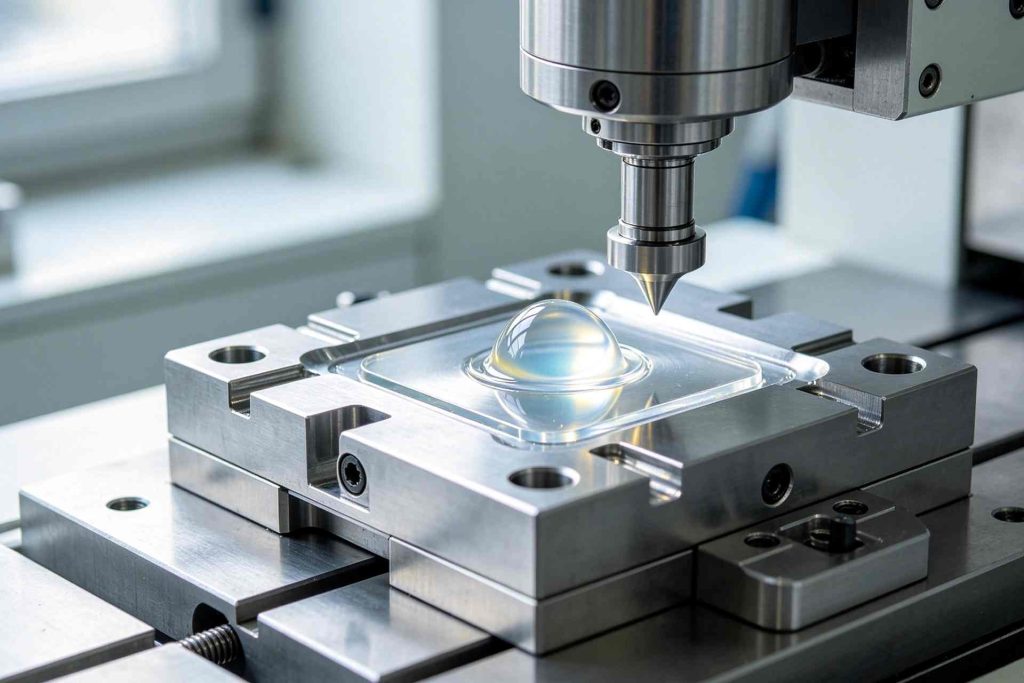
P20 is the default for low-to-mid volume production (under 300,000 shots) with commodity resins. 718H is preferred for larger molds and mid-to-high volume up to 1 million shots. NAK80 is the choice when mirror polish and uniform hardness are required, such as optical lenses and cosmetic surfaces.
H13 for Die Casting and Hot Work
H13 is the production workhorse for high-volume runs above 1 million shots and abrasive glass-filled resins. It is used for die casting dies with suggested hardness of 42–48 HRC for dies and 44–50 HRC for cores and inserts. H13 is also used for extrusion tooling and forging dies.
S136 for Corrosion-Resistant Molds
S136 is the correct choice for corrosive resins such as PVC and flame-retardant grades, as well as medical and optical applications. It is typically used at 48–52 HRC after heat treatment. The high chromium content forms a passive layer that resists attack from acidic gases released during processing.
Matching Grade to Production Volume and Plastic Type
The selection matrix is straightforward:
- Under 300,000 shots with commodity resins: P20 at 28–34 HRC
- 300,000–1,000,000 shots: 718H at 30–36 HRC or NAK80 at 38–43 HRC
- Over 1,000,000 shots or abrasive resins: H13 at 48–52 HRC
- Corrosive or optical resins: S136 at 48–52 HRC
For large forgings and heavy-section mold components, open die forgings provide the required structural integrity.
Sourcing Mold Steel
Wholesale and Custom Options
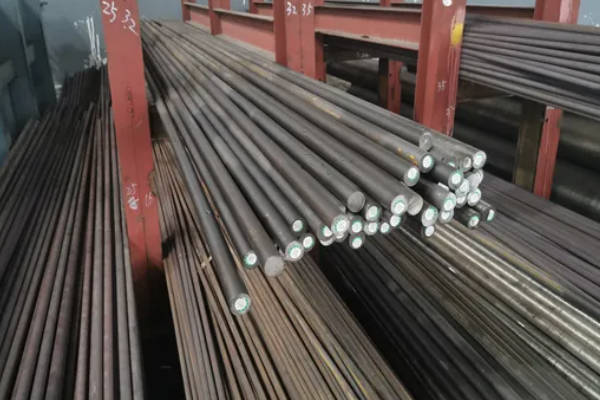
For mold makers and distributors, mold steel is available in round bar, plate, and block forms. NSPM supplies plastic mold steel, hot work tool steel, and cold work tool steel with custom cutting and heat treatment services. The company maintains inventory across multiple warehouses and supports wholesale, OEM, and ODM orders for global clients.
What to Confirm Before Ordering
Confirm the grade designation and standard, the delivery condition (pre-hardened or annealed), and whether mill test certificates can be provided. For pre-hardened grades, verify the hardness range and uniformity through the section. For grades requiring heat treatment, confirm the supplier’s vacuum heat treatment capacity and dimensional tolerance.
FAQs About Mold Steel
What is the difference between mold steel and tool steel?
Mold steel is a subset of tool steel specifically designed for molds and dies. It is classified as AISI P steels. While all mold steels are tool steels, not all tool steels are mold steels. Cold work and hot work tool steels serve different applications.
What is the most common mold steel?
P20 is the most common mold steel. It is pre-hardened to 28–34 HRC, machines easily, and costs less than other grades. It is suitable for prototypes and general-purpose plastic molds running under 500,000 shots.
What hardness should mold steel be?
It depends on the application. P20 at 28–34 HRC for general plastic molds. NAK80 at 38–43 HRC for mirror-polished surfaces. H13 at 48–52 HRC for die casting and abrasive resins. S136 at 48–52 HRC for corrosive resins.
Can mold steel be used for die casting?
Some mold steels, particularly H13, are used for die casting dies. H13 at 44–50 HRC provides the high-temperature strength and thermal fatigue resistance required for aluminum, zinc, and magnesium die casting.